Mephisto, short for Mephistopheles[a], is a figure from the German stories and legends surrounding Faust. The first recorded instance of the Faust legend is in the Historia von D. Johann Fausten, a chapbook published in 1587's Frankfurt about the historical figure of Johann Georg Faust, an alchemist and magician who is presumed to have died some time around 1540. The book was translated into English in 1588 or 1589 under the title The History of the Damnable Life and Deserved Death of Doctor John Faustus, also referred to as the English Faust Book. In the Historia von D. Johann Fausten Mephostophiles is a spirit that serves Lucifer, and who Faustus summons and makes a contract with.[1] Mephostophiles himself mainly serves as an explanation of how Faustus acquired his magic and knowledge in this version, and Mephisto as a character is only really developed in later stories such as Christopher Marlowe's play Doctor Faustus, or Johann Wolfgang von Goethe's play Faust. In both Marlowe's and Goethe's plays, Faust starts the tale as an academic dissatisfied with life and his accomplishments. He turns to witchcraft and magic as the answer to the workings of the universe, and summons Mephisto to act as his servant. Goethe's Faust has a prologue set in heaven, where Mephisto and The Lord discuss Faust and his dissatisfaction, and the two make a bet on whether Mephisto can damn Faust's soul to hell, or whether the man can be redeemed.[2] In this play, Mephisto himself is the Devil.[3][4] Faust's fate differs between stories; in the Historia and Marlowe's play he is damned to an eternity in hell as per his contract with Mephisto, but in Goethe's Faust he is ultimately redeemed and brought up to heaven.
In modern times, Mephistopheles is associated with the concept of the Deal with the Devil.
Design
This design section is a stub. You can help Megami Tensei Wiki by expanding it.
No reason provided.
Mephistopheles as portrayed by the English actor Henry Irving in a production of Faust.
Mephisto recieved a new design in Shin Megami Tensei IV: Apocalypse from Masayuki Doi. Doi chose to respect the existing iconography associated with Mephistopheles, depicting him as wearing red renaissance style clothing with a cape, spanish breeches, a small bycocket hat with long yellow ribbons coming off that resemble horns, and a golden belt around his waist with an ornate rapier hanging off. His face is that of a pale skinned man with long black hair and a goatee, with a pair of small black horns emerging from the back of his head. His uncovered eye is black with a purple iris and has three teardrop markings underneath hinting at his demonic nature.[5]
An angel of Hell. Name means "not light loving." Best know for being the demon summoned by Georg Faust. A leader in Hell, feared second only to Satan himself, though he's said to regret his fall from grace. As a result, he detests humans granted admission to heaven for their kind deeds. Mephisto boasts a wide load of expertise, including astronomy, astrology, meteorology, and illusion. His allusions are said to manupulate all five senses.
More accurately, Mephistopheles. He is one of the princes of Hell, and his name means "he who loves not the light."
He is commonly known as the demon summoned by Georg Faust. Other than Satan himself, he is the most feared commander in Hell. However, he despises having fallen into Hell and hates any and all humans who have been granted salvation. He is rather knowledgeable in the realms of astronomy, astrology, and meteorology in addition to being a skilled illusionist who can manipulate all five senses.
More accurately, Mephistopheles. He is one of the Princes of Hell, and his name means "he who loves not the light."
He is commonly known as the demon summoned by Georg Faust. Other than Satan himself, he is the most feared commander in Hell. However, he despises having fallen into Hell and hates any and all humans who have been granted salvation. He is rather knowledgeable in the realms of astronomy, astrology, and meteorology in addition to being a skilled illusionist who can manipulate all five senses.
氷の使徒につかえる 道化師 いつもおどけていて つかみどころがない しかし その実力は はかりしれないTranslation: A jester who serves the Ice Apostle. He is always droll and elusive, but his powers are immeasurable.
↑There are multiple variations on the name, with "Mephistopheles" being the most well-known as the name from Goethe's Faust. Other variants include "Mephostophiles", used in the Historia von D. Johann Fausten; "Mephastophilis", used in Christopher Marlowe's play; as well as "Mephostophiles" and "Mephostophilus" found in various puppet plays and local legends.[citation needed]
References
↑"The spirit answered: "My name is as thou sayest, Mephostophiles, and I am a prince, but servant to Lucifer:..."" "The third parley between Doctor Faustus and Mephostophiles about a conclusion. Chapter 5.", Doctor Faustus with The English Faust Book, Christopher Marlowe, Edited by David Wootton. Published by Hackett Publishing Co, Inc. English. p. 74. ISBN-13: 978-0872207295.
↑"The Lord: If today his services shows confused, disordered, With my help he will see the way clear forward; [...] Mephistopheles: Would you care to bet on that? You'll lose, I tell you. If you'll give me leave to lead the fellow Gently down my broad, my primrose path. [...] The Lord: So it's agreed, you have my full consent. Divert the soul of Faust from its true source And if you're able, lead him along, Hell bent With you, upon the downward course— Then blush for shame to find you must admit: For all his dark impulses, imperfect sight, A good man always knows the way that's right." "Prologue in Heaven", Faust: A Tragedy, Parts One and Two, Fully Revised, Johann Wolfgang von Goethe. Published by Yale University Press. English. p. 13. Translation by Martin Greenberg. ISBN-13: 978-0300189698.
↑"Mephistopheles: I like to see the Old Man now and then, And take good care I don't fall out with him. How very decent of a Lord Celestial To talk man to man with the Devil of all people." "Prologue in Heaven", Faust: A Tragedy, Parts One and Two, Fully Revised, Johann Wolfgang von Goethe. Published by Yale University Press. English. p. 14. Translation by Martin Greenberg. ISBN-13: 978-0300189698.
↑"Mephistopheles: Must I tell you of all people who I am? The Witch Oh sir, forgive me my discourteous salute! But I look in vain for your cloven foot, And your two ravens, where are they? Mephisto: All right, this time you're let off—I remember It's been so long since we've seen each other. Also, the world's grown so cultured today, Even the Devil's been caught up in it; [...] The Witch: I'm out of my mind with delight, I swear! My lord Satan's dropped out of the air. Mephisto: Woman, that name—I forbid you to use it. The Witch: Why not? Whyever now refuse it?" "Witch's Kitchen", Faust: A Tragedy, Parts One and Two, Fully Revised, Johann Wolfgang von Goethe. Published by Yale University Press. English. pp. 88-89. Translation by Martin Greenberg. ISBN-13: 978-0300189698.
↑"Masayuki Doi: Mephistopheles is a character from the legend of Faust who has been often interpreted in various plays, movies and so on, so people already have a certain image for him. I chose to respect that, but also add my own original points. The tears under his eye stand out by showing a certain number of people, but are also proof that he is a demon." [1]. Retrieved July 11, 2025.
 Digital Devil Story: Megami Tensei


 English
 Japanese
 Korean
 Peninsular Spanish
 Artwork from Digital Devil Story: Megami Tensei II
 Artwork from Shin Megami Tensei IV: Apocalypse
 Artwork from Devil Children Fire Book and Ice Book
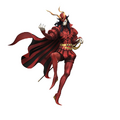 Render from Shin Megami Tensei: Liberation Dx2
 Sprite from Digital Devil Story: Megami Tensei
 Animated sprite from Digital Devil Story: Megami Tensei
 Sprite from Digital Devil Story: Megami Tensei II
 Animated sprite from Digital Devil Story: Megami Tensei II
 Sprite from Kyūyaku Megami Tensei: Megami Tensei I
 Animated sprite from Kyūyaku Megami Tensei: Megami Tensei I
 Sprite from Kyūyaku Megami Tensei: Megami Tensei II
 Animated sprite from Kyūyaku Megami Tensei: Megami Tensei II
 Sprite from the Mega-CD version of Shin Megami Tensei
 Sprite from the Game Boy Advance version of Shin Megami Tensei II
 Sprite from Shin Megami Tensei IV: Apocalypse
 Sprite from the Game Boy version of Last Bible
 Sprite of Mephisto's Beast form from the Game Boy version of Last Bible
 Sprite from the Game Boy Color version of Last Bible
 Sprite of Mephisto's Beast form from the Game Boy Color version of Last Bible
 Sprite from the Game Gear version of Last Bible
 Sprite of Mephisto's Beast form from the Game Gear version of Last Bible
 Sprite from Shinyaku Last Bible
 Sprite from Shinyaku Last Bible II: Hajimari no Fukuin
 Sprite from Shinyaku Last Bible III: Mugen no Eiyū
 Sprite from Majin Tensei II: Spiral Nemesis
 Sprite from Ronde
 Sprite from Devil Children Fire Book and Ice Book
 Icon from Shin Megami Tensei V
 Mephisto's stats in the Mega-CD version of Shin Megami Tensei
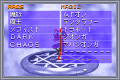 Mephisto in the A-Mode DDS Dictionary in the Game Boy Advance version of Shin Megami Tensei II
 Mephisto casting Walpurgisnacht in Shin Megami Tensei V: Vengeance


