Game Boy

The Game Boy[a] is an 8-bit fourth generation handheld video game console developed by Nintendo and released April 21, 1989 in Japan, July 31, 1989 in North America, and September 28, 1990 in Europe. It was the second handheld console from Nintendo. Game Boy featured a monochrome non-backlit[b] LCD screen with a green tint, which allowed it to use fewer batteries than its competitors the Game Gear and Atari Lynx. A smaller revised model, the Game Boy Pocket, was released in 1996 which uses two AAA batteries rather than four AAs; in addition, features a less-saturated hue for the screen background color and has improved compensation film, resulting in truer blacks for the liquid crystals. A backlit model known as the Game Boy Light was released exclusively in Japan on April 14, 1998.
An add-on for the Super Famicom called the Super Game Boy allows Game Boy games to be played on a television with colorization effects and unique borders. The player can pick from several choices of color schemes for any game. Many Game Boy games were developed with this in mind, including custom color functionality and borders in the game code. Some games have multiple borders that could be loaded depending on where the player is in the game.[1] A revised model called the Super Game Boy 2 was released in 1998 and fixed an issue with games running slightly too fast on Super Game Boy.
A significant hardware update called the Game Boy Color was released on October 21, 1998 in Japan and in November 1998 in the rest of the world. The Game Boy Color, like its name suggests, features 5-bit color graphics; it also includes a higher clock speed for its CPU, more RAM, and the addition of an infrared communication link. Older Game Boy games are able to use a selection of pre-selected palettes accessible through button combinations upon bootup, with some games having special default palettes included in the console's firmware; these can display up to six colors for the background and up to four colors for sprites. Many Game Boy games released after the Game Boy Color's launch support additional functionality (usually color) when played on Game Boy Color while also being fully playable on the original Game Boy and on Super Game Boy; these titles, known as dual Game Boy Color games,[2][3] can typically be distinguished by a black cartridge rather than the standard gray. Dedicated Game Boy Color titles[3] are exclusive to Game Boy Color and cannot be played on a standard Game Boy or on Super Game Boy. These titles feature translucent cartridges with a bulge where the Game Boy Color logo is located (replacing the recess where the Game Boy logo is located on original Game Boy and dual Game Boy Color games). Dual and dedicated Game Boy Color games can display up to 56 colors at a time from a selection of 32,768 possible individual colors.
The first Megami Tensei game released on the platform was Last Bible on December 23, 1992.
Megami Tensei games available for Game Boy
| Title | Release | GB | SGB | GBC | Notes |
|---|---|---|---|---|---|
| Last Bible |  Japan December 23, 1992 Japan December 23, 1992 |
Compatible | No added features | No added features | |
| Last Bible II | Japan November 19, 1993 |
Compatible | No added features | No added features | |
| Another Bible | Japan March 2, 1995 |
Compatible | Custom border, added color | No added features | |
| Last Bible (rerelease) | Japan March 19, 1999 United States of America August 30, 1999 United States of America August 30, 1999 |
Compatible | Custom border | Added color | Known in North America as Revelations: The Demon Slayer |
| Last Bible II (rerelease) | Japan April 16, 1999 |
Compatible | Custom border | Added color | |
| Devil Children Black Book and Red Book | Japan November 17, 2000 |
Compatible | Custom border | Added color | |
| Devil Children White Book | Japan July 27, 2001 |
Incompatible | Incompatible | Exclusive | |
| Shin Megami Tensei Trading Card: Card Summoner | Japan July 27, 2001 |
Incompatible | Incompatible | Exclusive |
Gallery
-
 Last Bible Super Game Boy border
 -
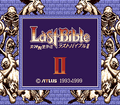 Last Bible II Super Game Boy border
 -
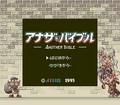 Another Bible Super Game Boy border on the title screen
 -
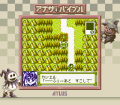 Another Bible Super Game Boy border during gameplay
 -
 Devil Children Black Book Super Game Boy border
 -
 Devil Children Red Book Super Game Boy border
 -
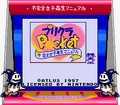 Purikura Pocket: Fukanzen Joshikousei Manual Super Game Boy border
 -
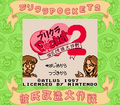 Purikura Pocket 2: Kareshi Kaizou Daisakusen Super Game Boy border


Notes
References
- ↑ Super Game Boy Borders. Archived: Vgmuseum archive. Retrieved February 25, 2025. .
- ↑ Can the different types of Game Boy, Game Boy Color and Game Boy Advance games be played on all Game Boy models?. Retrieved December 7, 2025. Nintendo UK.
- ↑ 3.0 3.1 Game Boy Programming Manual (1999). (Version 1.1 ed.) p. 5.
| Consoles and services | |
|---|---|
| Nintendo | Family Computer • Super Famicom • Virtual Boy • Wii • Wii U • Nintendo Switch • Nintendo Switch 2 Game Boy and Game Boy Color • Game Boy Advance • Nintendo DS • Nintendo 3DS |
| Sega | Mega-CD • Sega Saturn Game Gear |
| NEC | PC-8800 series • PC-9800 series • Super CD-ROM² |
| Sony | PlayStation • PlayStation 2 • PlayStation 3 • PlayStation 4 • PlayStation 5 PlayStation Portable • PlayStation Vita |
| Microsoft | Windows • Xbox • Xbox 360 • Xbox One • Xbox Series X • Xbox Series S |
| Feature phones | Atlus Web-i • MegaTen α • Megami Tensei • Atlus Web-EZ • Atlus Web-EX • MegaTen Online • Atlus Mobile |
| Other | MSX • X1 • Steam |