
|
This article contains NSFW content.
|
| The following imagery depicts content that is sexually explicit and/or graphically violent. Reader discretion is advised.
|
Asherah is a Demon in the Megami Tensei franchise.
Profile
Origin
Athirat[a] is the name of a major goddess in Ugaritic religion. She is most commonly presented as the consort of El, the head of the Ugaritic pantheon, and is associated with motherhood, fertility, sacred trees, and the divine family. In Ugaritic texts, she bears titles such as ʾElat, "goddess", the feminine form of El, and qnyt ỉlm, often interpreted as "progenitress of the gods". She is also described as the mother or nurse of the gods, reflecting her role as queen of the divine household rather than only a generic fertility figure.[1][2]
In the Baal Cycle, Athirat plays an important mediating role in the establishment of Baal's kingship. After Baal defeats Yam and seeks permission to build a palace, he and Anat are unable to secure El's approval directly. Athirat is then approached with gifts and successfully petitions El on Baal's behalf, allowing Baal's palace to be built and confirming his royal status among the gods. Her role in this narrative reflects her authority within the divine council and her position as El's consort and queen.[3][4]
Cognate names were used for related deities in other Semitic-speaking areas. The Akkadian form Ašratu or Aširatu is attested in Mesopotamian sources, while the Amorite form Ashratum appears in second-millennium BCE Amorite-Akkadian material and is the form described in Asherah's Liberation Dx2 compendium entry.[5][6] Related forms also appear in Hittite sources as Ašertu or Ašerdu, and in South Arabian inscriptions as ʾAṯirat.[7][8]
The name is also cognate to the Hebrew word Asherah,[b] which, as used in the Hebrew Bible, usually refers to a cultic object, often understood as a sacred tree, wooden pole, or stylized tree, and only occasionally refers to a deity; an example of the latter usage appears in 1 Kings 18:19. The relationship between the goddess and the cultic object remains debated, since the object may have represented the goddess, marked her presence, or functioned as a symbol associated with her worship.[9][10][11]
The Hebrew Bible frequently condemns the making, planting, and destruction of asherah objects, particularly in the Deuteronomistic History. These passages associate them with local shrines, altars, standing stones, and worship outside the exclusive cult of YHWH. According to 2 Kings, King Manasseh placed an image of Asherah in the Jerusalem Temple, while King Josiah later removed and destroyed it as part of his religious reforms.[12][13]
Some scholars have proposed that Asherah was worshiped as the wife or consort of YHWH, based especially on inscriptions from Kuntillet ʿAjrud and Khirbet el-Qom. Several inscriptions from Kuntillet ʿAjrud invoke "YHWH of Samaria" or "YHWH of Teman" together with "his asherah," while an inscription from Khirbet el-Qom uses a similar blessing formula. These inscriptions suggest that at least some ancient Israelites associated YHWH with Asherah, possibly as a consort, cult symbol, or protective divine presence.[14][15][16]
This interpretation remains contested, owing to the Hebrew word's use for a cultic object and the grammatical difficulty of reading "his asherah" as a proper divine name. Some scholars understand the phrase as referring to a sacred object associated with YHWH rather than to the goddess herself, while others argue that the object and goddess should not be sharply separated in ancient Israelite religious practice.[17][18][19]
Design
Asherah's design in Shin Megami Tensei: Strange Journey is apparently inspired by the Zentai suits worn by the supporting dancers featured in the Black Eyed Peas’ 2009 video for Boom Boom Pow.[citation needed]
Gameplay
|
|
| Name
|
Level
|
HP
|
MP
|
| Athirat
|
50
|
7724
|
524
|
|
|
|
| Race
|
Divine Clan
|
Alignment
|
EXP
|
Macca
|
Magnetite
|
Item
|
Speech
|
| Lady
|
Babel
|
LwLaw: 0
|
CsChaos: 47
|
LtLight: 30
|
DkDark: 0
|
51240
|
2642
|
1318
|
— (—⁄255)
|
Old-Fashioned Woman
|
|
| Intuition
|
Mind
|
Magic
|
Intelligence
|
Blessing
|
Strength
|
Vitality
|
Agility
|
Dexterity
|
Charm
|
Fate
|
| 54
|
52
|
57
|
36
|
41
|
78
|
70
|
62
|
27
|
75
|
10
|
|
|
|
|
|
Sword
|
Gun
|
Magic
|
| Accuracy
|
109+84
|
38
|
46
|
| Attack
|
30+98
|
1
|
57+6
|
| Evasion
|
84+12
|
38
|
38
|
| Defense
|
33+23
|
33+23
|
46+14
|
| Bullets
|
|
—
|
|
|
| Moon Effect
|
| 1 |
2 |
3 |
4 |
5 |
6 |
7 |
8 |
9 |
10 |
11 |
12 |
13 |
14 |
15 |
16 |
17 |
18 |
19 |
20 |
21 |
22 |
23 |
24 |
25 |
26 |
27 |
28
|
| — |
— |
— |
— |
— |
— |
— |
— |
— |
— |
— |
— |
— |
— |
— |
— |
— |
— |
— |
— |
— |
— |
— |
— |
— |
— |
— |
—
|
|
| Basic Attack
|
Element
|
Hit(s)
|
Target
|
| Sword
|
1
|
1
|
|
|
|
|
|
| Name
|
Level
|
HP
|
MP
|
| Athirat
|
48
|
1686
|
632
|
|
|
|
|
|
| Intuition
|
Mind
|
Magic
|
Intelligence
|
Blessing
|
Strength
|
Vitality
|
Agility
|
Dexterity
|
Charm
|
Fate
|
| 52
|
50
|
55
|
35
|
39
|
75
|
68
|
60
|
26
|
72
|
10
|
|
| Sword
|
Gun
|
Bullets
|
Head
|
Torso
|
Arm
|
Leg
|
Accessory
|
| —
|
—
|
—
|
—
|
|
—
|
—
|
—
|
|
|
|
Sword
|
Gun
|
Magic
|
| Accuracy
|
105
|
36
|
45
|
| Attack
|
29
|
1
|
55
|
| Evasion
|
81
|
36
|
37
|
| Defense
|
32
|
32
|
44
|
| Bullets
|
|
—
|
|
|
| Equip Type
|
Skill Groups
|
Acquisition Rate
|
| Goddess
|
Zio Line, Water Line, Healing Line
|
—
|
|
| Moon Effect
|
| 1 |
2 |
3 |
4 |
5 |
6 |
7 |
8 |
9 |
10 |
11 |
12 |
13 |
14 |
15 |
16 |
17 |
18 |
19 |
20 |
21 |
22 |
23 |
24 |
25 |
26 |
27 |
28
|
| — |
— |
— |
— |
— |
— |
— |
— |
— |
— |
— |
— |
— |
— |
— |
— |
— |
— |
— |
— |
— |
— |
— |
— |
— |
— |
— |
—
|
|
| Basic Attack
|
Element
|
Hit(s)
|
Target
|
| Sword
|
1
|
1
|
|
|
|
Compendium
| Compendium Entries
|
| Shin Megami Tensei: Strange Journey
|
A Semitic goddess who was the one to bring fertility to the Babylonian lands.
She is known as the mother of the gods. It is believed that in Phoenicia, she became Astarte.
|
| Shin Megami Tensei IV
|
A Semitic goddess who was the one to bring fertility to the Babylonian lands.
She is known as the mother of the gods. It is believed that in Phoenicia, she became Astarte.
|
| Shin Megami Tensei IV: Apocalypse
|
A Semitic goddess who was the one to bring fertility to the Babylonian lands.
She is known as the mother of the gods. It is believed that in Phoenicia, she became Astarte.
|
Game Appearances
Asherah is the true form of Asura, having been given the power to turn back into her by Mother Tiamat. Encountered in Sector Fornax, Asura transforms into Asherah to stop the Protagonist from reaching her. Asherah declares that the demons and chosen humans will restore the Earth through destruction and attacks the Protagonist regardless of what he tells her. When defeated, Asherah feebily speaks out to Tiamat to warn her of the Protagonist's approach.

End of spoilers.
Athirat is one of the demons that devour Yuuka Tachibana in Hatsudai Shelter, she holds the torso of Yuuka within her.
Athirat is the demon that Shizuna Kakusei, leader of the Mother Venus cult summons for killing Ayato Katsuragi, and so after saying that the previous demons that have perished againts Katsuragi have only done so because they have underestimated him, but that his good luck has ended and so a fight begins. Athirat tells Katsuragi upon dying that they had a good fight, and so she perishes.
-
End of spoilers.
Trivia
Nomenclature
Gallery
-
-
-
Sprite from Shin Megami Tensei: Strange Journey
-
-
Sprite from the
PC-98 version of
Giten Megami Tensei: Tokyo Revelation
-
Attack sprite from the PC-98 version of Giten Megami Tensei: Tokyo Revelation
-
Hurt sprite from the PC-98 version of Giten Megami Tensei: Tokyo Revelation
-
Sprite from the
Windows version of
Giten Megami Tensei: Tokyo Revelation
-
Attack sprite from the Windows version of Giten Megami Tensei: Tokyo Revelation
-
Hurt sprite from the Windows version of Giten Megami Tensei: Tokyo Revelation
-
Portrait graphic from Shin Megami Tensei: Strange Journey
-
Asherah eating the body of
Yuuka Tachibana in the PC-98 version of
Giten Megami Tensei: Tokyo Revelation
-
Asherah eating the body of Yuuka Tachibana in the Windows version of Giten Megami Tensei: Tokyo Revelation
-
Notes
- ↑ Ugaritic: 𐎀𐎘𐎗𐎚, romanized a͗ṯrt (vocalized *ʾAṯirat-)
- ↑ Hebrew: אֲשֵׁרָה, romanized ʾĂšērâ
References
- ↑ Binger 1997, pp. 42-93.
- ↑ Wyatt 1999, pp. 99-105.
- ↑ Wyatt 2002, pp. 108-119.
- ↑ Smith 1994, pp. 114-116.
- ↑ Wiggins 2007, pp. 153, 171-172.
- ↑ Hess 1996, pp. 209-219.
- ↑ Hoffner 1998, p. 90.
- ↑ Wiggins 2007, pp. 175-181.
- ↑ "Asherah אשׁרה", Dictionary of Deities and Demons in the Bible Online (2018), Nicolas Wyatt. Published by Brill. https://doi.org/10.1163/2589-7802_DDDO_DDDO_Asherah
- ↑ Hadley 2000, pp. 53-84.
- ↑ Olyan 1988, pp. 23-37.
- ↑ "He placed the sculptured image of Asherah that he made in the House concerning which the LORD had said to David and to his son Solomon, “In this House, and in Jerusalem which I have chosen out of all the tribes of Israel, I will establish My name forever.”" II Kings 21:7. Retrieved May 15, 2026. Sefaria.
- ↑ "He brought out the Asherah from the House of the LORD, outside Jerusalem, to the Wadi Kidron, and burned it in the Wadi Kidron; he beat it to dust and scattered its dust over the burial ground of the common people." II Kings 23:6. Retrieved May 15, 2026. Sefaria.
- ↑ Hadley 2000, pp. 122-136.
- ↑ Dever 2005, pp. 176-200.
- ↑ Stavrakopoulou 2021, pp. 217-225.
- ↑ "Asherah אשׁרה", Dictionary of Deities and Demons in the Bible Online (2018), Nicolas Wyatt. Published by Brill. https://doi.org/10.1163/2589-7802_DDDO_DDDO_Asherah
- ↑ Olyan 1988, pp. 23-37.
- ↑ Puech 2015, pp. 5-25.

 Giten Megami Tensei: Tokyo Revelation


 English
 Japanese


 Traditional Chinese
 Korean
 Artwork from Shin Megami Tensei: Strange Journey
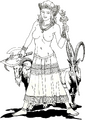 Artwork of Athirat and the Fertility Goat by Katsumi Aizaki for Giten Megami Tensei: Tokyo Revelation
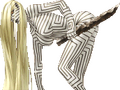 Sprite from Shin Megami Tensei: Strange Journey
 Sprite from Shin Megami Tensei IV
 Sprite from the PC-98 version of Giten Megami Tensei: Tokyo Revelation
 Attack sprite from the PC-98 version of Giten Megami Tensei: Tokyo Revelation
 Hurt sprite from the PC-98 version of Giten Megami Tensei: Tokyo Revelation
 Sprite from the Windows version of Giten Megami Tensei: Tokyo Revelation
 Attack sprite from the Windows version of Giten Megami Tensei: Tokyo Revelation
 Hurt sprite from the Windows version of Giten Megami Tensei: Tokyo Revelation
 Portrait graphic from Shin Megami Tensei: Strange Journey
 Asherah eating the body of Yuuka Tachibana in the PC-98 version of Giten Megami Tensei: Tokyo Revelation
 Asherah eating the body of Yuuka Tachibana in the Windows version of Giten Megami Tensei: Tokyo Revelation
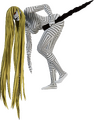 Model from Shin Megami Tensei: Liberation Dx2


