Huang Di
| Huang Di | |
| コウテイ | |

Artwork from Devil Summoner: Soul Hackers | |
| Other Name(s) | Koutei |
| Origin | Chinese culture Taoism Chinese folk religion |
| Race(s) | Famed Shin Megami Tensei IV Shin Megami Tensei IVShin Megami Tensei IV: Apocalypse Hero Shin Megami Tensei: JShin Megami Tensei: Liberation Dx2 Devil Summoner: Soul Hackers Kētai Akuma Densho |
| Alignment(s) | Light-NeutralDevil Summoner: Soul Hackers Neutral Shin Megami Tensei IVShin Megami Tensei IV: Apocalypse |
| Arcana | Emperor |
Huang Di is a Demon in the Megami Tensei franchise.
Profile
Origin
Huángdì[a] (lit. "yellow emperor") is a legendary emperor said to have ruled China circa 2700-2600 BC, chiefly mentioned in Sima Qian's Records of the Grand Historian[1] as a 神 shén (a sort of deity) worshiped by the State of Qin in 500 BC. In the over 2,500 years of his existence in human memory, his mythology has shifted and contrasted, ranging from faux-historical documents to folk tales and mythological accounts.
In Chinese folk religion, Huangdi is one of the Five Regions Highest Deities.[b] According to Youxue Qionglin, Huangdi is named such to align with Wuxing doctrine: By symbolising the centre, and thus having Earth's essence within 戊己 of the Celestial Stems, a unification of yin and yang when together, he is deemed "Huang" Di - the "Yellow" Emperor.[2] His actual name has conflicting accounts; Among other sources, Records of the Grand Historian lists his name as Xuan Yuan,[c][3] with the family name Gong Sun[d][4] and nickname You Xiong,[e][5] which is said to be the origin for the modern family name 熊 Xióng.[6] The earlier source Shuowen Jiezi, however, says that his family name was 姬 Jī, which he took from living next to the Ji River.[7]
As a historical figure, Huangdi was born on Longevity Hill and spent the bulk of life life at Xuanyuan Hill. At this time, Huang Long appeared before his mother, Fubao, as a lightning bolt, something that only occurs when something truly fortunate occurs. He lived in the area beforehand, enjoying himself north of the Scarlet River and Kunlun Mountains. Zhuangzi tells the story of him losing a pearl, and only finding it when he did so without a purpose, as was coherent with the Dao.[8] In Shuowen Jiezi, a story is told of Huang Di being bestowed a Xiezhi by a deity, to which he conversed.[9] Huangdi is said to have had 25 sons, 14 with surnames, with a wife named Leizu who domesticated silkworms to create clothes such as qipao and hanfu.[10][11] One of their sons notoriously engaged in the worst vices, being branded as Hundun of the Four Perils.[12] It could be said that Huang Di pioneered government: According to Youxue Qionglin, Huang Di mapped out the wilderness and districted it into royal capitals (都) and regional towns (邑).[2] His grandson, Yu Qiang, appears as a wind and sea deity of the north.[13] His minister for history, Cang Jie, is said to have created the Han characters that write the Chinese language family on Huang Di's orders, and has since been used as a namesake for the Cang Jie input method for Chinese, and several dictionaries.[14][10]
Upon dying, Huangdi transformed into the Huang Long to fly to heaven, becoming a Daoist immortal. Zhuangzi expanded on this, believing that Huang Di ascended to heaven through his acquisition of the Dao, and in other views even the founding of Daoism itself.[8] It was at this point that Huang Di ascended to Five Regions Highest Deity status. Two tombs were built in his honour.
As a ruler, Huang Di dominated the Three Sovereigns and Five Emperors era. He is said to have defeated Chi You and the Flame Emperor in the battles of Zhoulu and Banquan to solidify his rule. He succeeded in this through inventing various weapons of war, such as the south-facing chariots and bow sling. To ensure Chi You's defeat in particular, Huang Di called upon the deity Nuba to cause a drought.
Huangdi is credited for writing the Daoist Books of the Yellow Emperor,[f] alongside numerous other texts, thus crediting him with many forms of traditional Chinese knowledge. It is within the Books of the Yellow Emperor that he is said to represent the centre of the universe and all four directions, akin to the Four Symbols and Huang Long. Huang Di is also described as recruiting the divine creature Bai Ze to draw images of ghosts and deities in the Book of Song, creating the widely-cited but now lost Baize Tu.[15] Therefore, while Huang Di's historicity is disputed, his influence on Chinese history and culture is extensive, being preserved in numerous idioms and fiction to this day. One such idiom is 炎黄子孙 Yánhuángzǐsūn, meaning that all Chinese are descended from the Flame Emperor and Huang Di.
Design

Matching traditional illustrations, Huang Di is depicted as a Chinese scholar, featuring a yellow mianfu[g] robe with Qinglong on it, resembling the Qing dynasty flag. Most notably, however, he wears a mianguan[h] with a yin-yang symbol on it; mianguan are traditional forms of headdress worn by historical emperors of China and their ministers. Huang Di also wields a sword, also with a yin-yang symbol.
Kazuma Kaneko says that he was originally going to incorporate the motif of the Eight Trigrams, though he did not like drawing the dragon in that pattern.[16]
Gameplay
Shin Megami Tensei IV
|
|
| ||||||||||||||||||||||||||||||||
| ||||||||||||||||||||||||||||||||||
| ||||||||||||||||||||||||||||||||||
| ||||||||||||||||||||||||||||||||||
| ||||||||||||||||||||||||||||||||||
| ||||||||||||||||||||||||||||||||||


Shin Megami Tensei IV: Apocalypse
|
|
| ||||||||||||||||||||||||||||||||||||
| ||||||||||||||||||||||||||||||||||||||
| ||||||||||||||||||||||||||||||||||||||
| ||||||||||||||||||||||||||||||||||||||
| ||||||||||||||||||||||||||||||||||||||
| ||||||||||||||||||||||||||||||||||||||
| ||||||||||||||||||||||||||||||||||||||
| ||||||||||||||||||||||||||||||||||||||


Compendium

|
This section has content in need of translation. |
| The content in this section is missing a translation. You can help Megami Tensei Wiki by adding one. |
| Compendium Entries | |
|---|---|
| Shin Megami Tensei IV |
The Yellow Emperor. He is the legendary emperor of China who is thought to be the founder of Chinese civilization. When his mother Fu Pao became pregnant with him, she began to glow brightly, and the pregnancy lasted 24 months. He is famous for inventing several things, lending his talents to creating houses, clothes, wagons, boats, music, and medicine. |
| Shin Megami Tensei IV: Apocalypse |
The Yellow Emperor. He is the legendary emperor of China who is thought to be the founder of Chinese civilization. When his mother Fu Pao became pregnant with him, she began to glow brightly, and the pregnancy lasted 24 months. He is famous for inventing several things, lending his talents to creating houses, clothes, wagon, boats, music, and medicine. |
| Devil Summoner: Soul Hackers(3DS) |
The legendary Yellow Emperor of China who is thought to be the founder of Chinese civilization. When his mother Dubhe became pregnant with him, she began to glow brightly, and the pregnancy lasted 24 months. He is famous for inventing several things, lending his talents to creating houses, clothes, wagons, boats, music, and medicine. |
| Persona Q2: New Cinema Labyrinth |
The Yellow Emperor. He is the legendary emperor of China who is thought to be the founder and creator of houses, clothes, wagons, boats, music, and medicine. |
| Kētai Akuma Densho |
黄帝。中国神話時代の帝王。人類に最初の文化を与えた文化創造者とされる。 出身地:中国コウテイは神話時代の中国の支配者であり、最高の天神とされる人物で、彼の母は、雷光が天子のシンボルであるとされる北斗七星の第一星をめぐって輝いたのを感じて妊娠し、24ヶ月をかけてコウテイを産んだと伝えられている。彼は人類に最初の文化をもたらした者であるといわれる。人類にはじめて家屋を作って与え、獣皮の代わりに繊維で作った衣類や車や船だとの利器を授け、暦や律を作り出し、あらゆる草木をなめて医薬を発見したとも言われる。Translation: |
Nomenclature
| Language | Name | Meaning |
|---|---|---|
 English English
|
Huang Di | |
 Japanese Japanese
|
コウテイ Kōtei | Japanese pronunciation of the Chinese epithet 黃帝. |
   Traditional Chinese Traditional Chinese
|
黃帝 Huángdì | Yellow Emperor |
 Korean Korean
|
황제黃帝 Hwangje | Sino-Korean Reading of 黃帝 |
Gallery
-
 Artwork from Devil Summoner: Soul Hackers
 -
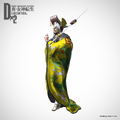 Render from Shin Megami Tensei: Liberation Dx2
 -
 Sprite from Shin Megami Tensei IV
 -
 Sprite from the PlayStation version of Devil Summoner: Soul Hackers
 -
 Sprite from the Nintendo 3DS version of Devil Summoner: Soul Hackers
 -
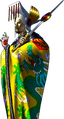 Graphic from Persona Q2: New Cinema Labyrinth


Notes
- ↑ Simplified Chinese: 黄帝, Traditional Chinese: 黃帝, romanized Huángdì
- ↑ Simplified Chinese: 五方上帝, Traditional Chinese: 五方上帝, romanized Wǔfāng Shàngdì
- ↑ Simplified Chinese: 轩辕, Traditional Chinese: 軒轅, romanized Xuān Yuán
- ↑ Simplified Chinese: 公孙, Traditional Chinese: 公孫, romanized Gōng Sūn
- ↑ Simplified Chinese: 有熊, Traditional Chinese: 有熊, romanized Yǒu Xióng, "possessor of bears"
- ↑ Simplified Chinese: 黄帝四经, Traditional Chinese: 黃帝四經, romanized Huángdì Sìjīng
- ↑ Chinese: 冕服, romanized miǎnfú
- ↑ Chinese: 冕冠, romanized miǎnguān
References
- ↑ 漢·司馬遷·《史記·五帝本紀》
- ↑ 2.0 2.1 Cheng, D.J. et al. (2023). 幼学琼林 [Yòuxué Qiónglín] in 幼学琼林三百千 [Yòuxué Qiónglín Sānbǎiqiān]. 万卷出版社 [Wanjuan Publishing House]. Quote: 黄帝画野,始分都邑,夏禹治水,初奠山川。[...] 中央戊己属士,其色黄,故中央帝曰黄帝。
- ↑ 《大戴礼记》: 孔子曰:“黄帝,少典之子也,曰轩辕。生而神灵,弱而能言,幼而慧齐,长而敦敏,成而聪明。治五气,设五量,抚万民,度四方;教熊罴貔豹虎,以与赤帝战于版泉之野,三战然后得行其志。黄帝黼黻衣,大带黼裳,乘龙扆云,以顺天地之纪,幽明之故,死生之说,存亡之难。时播百谷草木,故教化淳鸟兽昆虫,历离日月星辰;极畋土石金玉,劳心力耳目,节用水火材物。生而民得其利百年,死而民畏其神百年,亡而民用其教百年,故曰三百年。” https://ctext.org/dictionary.pl?if=en&id=44791&remap=gb
- ↑ 《史记》: 黃帝者,少典之子,姓公孫,名曰軒轅。生而神靈,弱而能言,幼而徇齊,長而敦敏,成而聰明。https://ctext.org/shiji/wu-di-ben-ji
- ↑ 《史记》: 自黄帝至舜、禹,皆同姓而异其国号,以章明德。故黄帝为有熊,帝颛顼为高阳,帝喾为高辛,帝尧为陶唐,帝舜为有虞。帝禹为夏后而别氏,姓姒氏。契为商,姓子氏。弃为周,姓姬氏。https://ctext.org/dictionary.pl?if=en&id=4502&remap=gb#s10034916
- ↑ Hu, P., Zhao, S.D. & Gao, X.L. (2017).百家姓大典 [Baijiaxing Dadian] (Li, S. & Dong, G.L. Eds., Lei, A.P. Contribs). 云南人民出版社 [Yunnan People's Publishing House].
- ↑ 《说文解字》姬:黄帝居姬水,以为姓。从女𦣞声。https://ctext.org/shuo-wen-jie-zi/ens?searchu=%E9%BB%84%E5%B8%9D#n34675
- ↑ 8.0 8.1 Zhuang, Z. (2016). 庄子 [The Chuang Tzu] (Legge, J., Liu, J.H., & Wang, Y.J trans.). 1st ed. 中州古籍出版社 [Zhongzhou Ancient Books Publishing House]. Legge translation originally published in 1891.
- ↑ 《说文》曰:獬豸,似牛,一角。古者决讼,命触不直。黄帝时有遗帝獬豸者,帝问何食何处,曰:“食荐。春夏处水泽,秋冬处竹箭松筠。[1]
- ↑ 10.0 10.1 Cheng et al. 2023. 幼学琼林 三百千 [yòu xué qióng lín sān bǎi qiān] (Xia, H. et al eds.) 万卷版有限责任公司 [Wanjuanban Limited Company]. ISBN: 978-7-5470-6220-3.
- ↑ Baidu Baike contributors. 2025. 嫘祖 [Leizu] in 百度百科 [Baidu Baike]. https://baike.baidu.com/item/%E5%AB%98%E7%A5%96/558987.
- ↑ Qian, Sima. 五帝本纪 in 史记. https://ctext.org/shiji/wu-di-ben-ji/ens?searchu=%E7%BC%99%E4%BA%91%E6%B0%8F%E6%9C%89%E4%B8%8D%E6%89%8D%E5%AD%90&searchmode=showall#n4498 In ancient days the Emperor Hong (Huangdi) had a son devoid of ability, who shut himself off from duty, and was a villain in secret, delighting in the practice of the worst vices, and all men called him Hundun (Chaos). (The Emperor) Shaohao had a descendant devoid of ability, who overthrew good faith, hated loyalty, extolled specious and evil talk, and all the people called him Qiongji (Monster). Zhuanxu had a son devoid of ability, who would receive no instruction and acknowledge no good words, and all the people called him Taowu (Block). These three men everyone was distressed about until the time of Yao, but Yao could not send them away. Jinyun had a son devoid of ability, who was greedy in eating and drinking, and pursued wealth blindly. All the people called him Taotie (Glutton), hated and compared him to the three other wicked men. Shun received visitors at the four gates, but banished these four wicked ones to the four borders of the empire to manage hobgoblins; and those at the four gates rightly said there were no wicked men among them.
- ↑ 禺強 in GACC. 中華語文知識庫 [Chinese Language Knowledge Base]. 2012.
- ↑ Zhou, Z.P. & Zhang, X.Y. 2018. 仓颉 [Cang Jie]. 文白文艺出版社 [Wenbai Wenyi Publishing House]. IBSN: 978-7-5513-1454-1.
- ↑ 《宋書》
- ↑ "なんで、自分的には八卦とかっていうイメージで考えました。記述通りの服装にしたんですが、この模様のドラゴンを描くのがすごく嫌だったんですよ。" Devil Summoner: Soul Hackers no Subete (1998), CB's Project. Published by Aspect. Japanese. p. 180. ISBN-13: 978-4-7572-0011-1.
- Pages needing translations
- Demons from Chinese Culture
- Demons from Chinese folk religion
- Demons from Taoism
- Demons in Shin Megami Tensei IV
- Demons in Shin Megami Tensei IV: Apocalypse
- Guardians in Shin Megami Tensei: J
- Demons in Shin Megami Tensei: Liberation Dx2
- Demons in Devil Summoner: Soul Hackers
- Personas in Persona Q2: New Cinema Labyrinth
- Demons in Kētai Akuma Densho