Myrmecolion


Myrmecolion is a Demon in the Megami Tensei franchise.
Profile
Origin
The myrmecoleon is a purported creature which is half-ant and half-lion. This word first appeared in the Greek translation of Job 4:11 in the Septuagint, which translates the Hebrew word לַיִשׁ layiš (a poetic word for "lion") as μυρμηκολέων myrmēkoléōn (literally "ant-lion").[a] The identification of the myrmecoleon as a literal ant-lion hybrid is first known to appear in the Physiologus, a Greek text written at some point between the 2nd and 4th centuries AD, and it later appeared in European bestiaries.[1]
The verb in Job says that the myrmecoleon perishes due to lack of prey, and this was expanded upon in the Physiologus to be because of its dual nature as ant (a herbivore) and lion (a carnivore). The entry in the Physiologus concludes with a moral lesson that so too is a double-minded person unstable in all his ways (James 1:8).[1]
The myrmecoleon is not to be confused with the actual insect known in English as the antlion.
Design
Myrmecolion appears as a creature with the head of a lion and the abdomen of an ant. It has six legs, with the front two being a lion's forelegs and the remaining four being ant legs.
Gameplay
- For complete gameplay information, see Gameplay:Myrmecolion.
Compendium
| Compendium Entries | |
|---|---|
| Shin Megami Tensei: Strange Journey |
A beast with the front of a lion and the back of an ant. It is the result of a lion and ant mating, but because the lion part eats meat and the ant part eats vegetables, it will die of starvation. It was born from a mistranslation of the Bible. |
| Shin Megami Tensei IV |
A monster whose front half is a lion and rear half is an ant. It is said to be born when a male lion impregnates an ant egg. Because its father is carnivorous and its mother herbivorous, it eats nothing and dies of starvation. It was apparently a mistranslation of "old lion" in the Book of Job that gave rise to this strange creature. |
| Shin Megami Tensei IV: Apocalypse |
A monster whose front half is a lion and rear half is an ant. |
| Shin Megami Tensei: Devil Summoner(Akuma Zensho; PSP) |
出身地:ギリシア 身体の前半分がライオン、後ろ半分がアリの姿をするという魔物。 雄ライオンがアリの卵に受精させることによって、ミルメコレオが生まれるといわれる。生態はアリに近いらしく、穴の中に棲むという。父が肉食、母が草食であるため、ミルメコレオは何も食えずに飢えて死ぬともいわれる。 ミルメコレオの元来の表記は聖書のヨブ記にある「老いたる獅子」だが、その誤訳によってこの奇怪な生き物が生まれた。Translation: Place of origin: GreeceA beast said to have the front half of a lion and the back half of an ant. A Myrmecolion is said to be born when a male lion inseminates ant eggs. It appears to have habits resembling those of an ant and lives in holes. It is carnivorous like its father, and herbivorous like its mother, so it is also said that a Myrmecolion will starve to death because it can eat nothing. The Myrmecolion was first described in the Bible's Book of Job as an "aging lion", but due to a mistranslation, this strange creature was born. |
| Devil Children Black Book and Red Book | GBC: ライオンのアタマ とアリのからだを もつデビル スキキライが おおくていつも ハラペコPS: ライオンの頭 とアリの体を 持つデビル 好き嫌いが 多くていつも ハラペコTranslation: A Devil with the head of a lion and body of an ant. It has many likes and dislikes, and is always hungry. |
| Devil Children White Book | ライオンのアタマ とアリのからだを もつデビル スキキライが おおくていつも ハラペコTranslation: A Devil with the head of a lion and body of an ant. It has many likes and dislikes, and is always hungry. |
| Devil Survivor 2: Record Breaker |
A monster whose front half is a lion and rear half is an ant. It is said to be born when a male lion impregnates an ant egg. Because its father is carnivorous and its mother herbivorous, it eats nothing and dies of starvation. It was apparently a mistranslation of "old lion" in the Book of Job that gave rise to this strange creature. |
| Kaneko Kazuma Dennō Akuma Zukan | ギリシア語で「蟻」を意味する“ミュルメクス”、「獅子」を意味する“レオ”をあわせた名を持つ、上半身がライオンで下半身が蟻の怪物。その矛盾した肉体は、蟻の下半身を持つため肉を食べられず、ライオンの上半身を持つため穀物を食べられないという結果を生み、ミルメコレオは生まれるとすぐに飢えて死んでしまうという。Translation: Its name is a combination of the Greek words for "ant", myrmex, and "lion", leo. It is a monster with the upper half of a lion and the lower half of an ant. This contradictory body results in an inability to eat meat because of its ant half, nor can it eat grains because of its lion half, so it is said that the Myrmecolion starves and dies right after it is born. |
Game Appearances

|
This appearance section is a stub. You can help Megami Tensei Wiki by expanding it. |
| No reason provided. |
Shin Megami Tensei IV
Shin Megami Tensei: Devil Summoner
Persona 5: The Phantom X
- Main article: Shadow Shimotsuna
Myrmecolion appears in Persona 5: The Phantom X as the Shadow of Takami Shimotsuna.
Nomenclature
|
|
This nomenclature section is a stub. You can help Megami Tensei Wiki by expanding it. |
| Reason: Missing romanizations and meanings. |
| Language | Name | Meaning |
|---|---|---|
 English English
|
Myrmecolion | |
 Japanese Japanese
|
ミルメコレオ Mirumekoreo | Myrmecoleo; Latinized form of Myrmecoleon |
 Simplified Chinese Simplified Chinese
|
密尔美可里奥 | |
   Traditional Chinese Traditional Chinese
|
密爾美可里奧 | |
 Korean Korean
|
미르메콜레오 Mireumekolleo | Myrmecolion |
Gallery
-
 Artwork from Shin Megami Tensei: Devil Summoner
 -
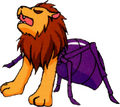 Artwork from Devil Children Black Book and Red Book
 -
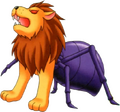 Artwork from Devil Children White Book
 -
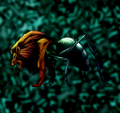 Render from Shin Megami Tensei: Devil Summoner: Akuma Zensho
 -
 Sprite from Shin Megami Tensei IV
 -
 Sprite from the Sega Saturn version of Shin Megami Tensei: Devil Summoner
 -
 Sprite from the Game Boy Color version of Devil Children Black Book and Red Book
 -
 Sprite from the PlayStation version of Devil Children Black Book and Red Book
 -
 Sprite from Devil Children White Book
 -
 Sprite from Devil Survivor 2
 -
 Sprite from Devil Survivor 2: Record Breaker
 -
 Sprite from Shin Megami Tensei Trading Card: Card Summoner
 -
 Icon from Devil Survivor 2
 -
 Graphic from Devil Survivor 2: Record Breaker
 -
 Icon from Devil Survivor 2: Record Breaker
 -
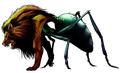 Graphic from Kaneko Kazuma Dennō Akuma Zukan
 -
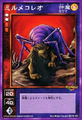 Card FW-061 from Shin Megami Tensei Devil Children Card Game: Byakusei no Monshou


Notes
- ↑ This same Hebrew word is translated as σκύμνος λέοντος skýmnos léontos ("lion cub") in Proverbs 30:30 and Isaiah 30:6.
References
- Pages with section stubs
- Pages with appearance section stubs
- Pages with nomenclature section stubs
- Demons from Christianity
- Demons from Greek Culture
- Demons in Shin Megami Tensei: Strange Journey
- Demons in Shin Megami Tensei: Strange Journey Redux
- Demons in Shin Megami Tensei IV
- Demons in Shin Megami Tensei IV: Apocalypse
- Demons in Shin Megami Tensei: Devil Summoner
- Demons in Devil Children Black Book and Red Book
- Demons in Devil Children White Book
- Demons in Devil Survivor 2
- Demons in Devil Survivor 2: Record Breaker
- Demons in Shin Megami Tensei Trading Card: Card Summoner
- Demons in Kaneko Kazuma Dennō Akuma Zukan