Alilat

Alilat is a Demon in the Megami Tensei franchise.
Profile
Origin
Allat or al-Lat[a] is an Arabian goddess who was worshiped in various parts of the Arabian Peninsula, including Mecca, before the advent of Islam. She was considered one of the three chief goddesses of the pre-Islamic Arabian pantheon, alongside al-Uzza and Manat. Worshippers of Alilat often associated her with fertility, the earth, and feminine qualities, though different tribes had their own representations and beliefs associated with her. However, deities of Arabian paganism, including Alilat, lost their significance in the 7th century following the prophet Muhummad's revelations and the rise of Islam, a faith which condemned the worship of idols other than Allah the one God.
The Greek historian Herodotus, speaking of the Arabs, says that they worshiped only two deities: Orotalt (whom he equated with Dionysus) and Alilat[b] (whom he equated with Aphrodite Urania).[1]
Design
Alilat is a large cubic stone covered in red engravings which resemble a feminine figure.
Gameplay
- For complete gameplay information, see Gameplay:Alilat.
Compendium
| Compendium Entries | |
|---|---|
| Shin Megami Tensei: Strange Journey |
The Arabian mother goddess also known as Allat. She was thought to reside in the Black Stone at the Kaaba. She and her son, Dusura, were worshipped there by desert nomads. |
| Shin Megami Tensei IV |
The Arabian mother goddess also known as Allat. She was thought to reside in the Black Stone at the Kaaba. She and her son, Dusura, were worshipped there by desert nomads. |
| Shin Megami Tensei IV: Apocalypse |
The Arabian mother goddess also known as Allat. She was thought to reside in the Black Stone at the Kaaba. |
| Shin Megami Tensei V |
The Arabian mother goddess also known as Allat. She was thought to reside in the Black Stone at the Kaaba, where she and her son, Dusura, were worshiped by desert nomads. |
| Shin Megami Tensei V: Vengeance |
An Arabian mother goddess, also known as Al-Lat. Invoked for a variety of purposes, from good weather and protection to vengeance and pestilence. |
| Devil Summoner: Soul Hackers(3DS) |
The Arabian mother goddess also known as Allat. She was thought to reside in the Black Stone at the Kaaba. She and her son, Dusura, were worshiped there by desert nomads. |
| Persona 3 |
The Arabian mother goddess, also known as Allat. The Black Stone at the Kaaba was thought to be her residence. She and her son, Dusura, were worshipped there by desert nomads. |
| Persona 3 FES | |
| Persona 3 Portable | |
| Persona 3 Reload |
The Arabian mother goddess, also known as Allat. The Black Stone at the Kaaba was thought to be her residence. She and her son, Dushara, were worshiped there by desert nomads. |
| Persona 4 |
The Arabian mother goddess, also known as Allat. The Black Stone at the Kaaba was thought to be her residence. She and her son, Dusura, were worshipped there by desert nomads. |
| Persona 4 Golden | |
| Persona 5 Royal |
The Arabian mother goddess also known as Allat. She was thought to reside in the Black Stone at Kaaba. She and her son, Dusura, were worshipped there by desert nomads. |
| Persona Q: Shadow of the Labyrinth |
The Arabian mother goddess, also known as Allat. The Black Stone at the Kaaba was thought to be her residence. She and her son, Dusura, were worshipped there by desert nomads. |
| Persona Q2: New Cinema Labyrinth |
The Arabian mother goddess, also known as Allat. The Black Stone at the Kaaba was thought to be her residence. She and her son, Dusura, were worshipped there by desert nomads. |
| Persona 5 Tactica |
An Arabian mother goddess, also known as Al-Lat. Invoked for a variety of purposes, from good weather and protection to vengeance and pestilence. |
| Persona 5: The Phantom X |
The Arabian mother goddess also known as Allat. She was thought to reside in the Black Stone at the Kaaba. She and her son, Dusura, were worshipped there by desert nomads. |
| Devil Survivor 2 |
The Arabian mother goddess, also known as Allat. The Black Stone at the Kaaba was thought to be her residence. She and her son, Dusura, were worshipped there by desert nomads. |
| Devil Survivor 2: Record Breaker | |
| Kētai Akuma Densho |
アラビア地方の古い母神。4面の石柱を御神体として崇拝されたとされる。 出身地:アラビアアリラトはアラビア地方で古くから崇拝され続けてきた母神で、アルラトとも呼ばれる。原始の月の神であるとも、ぶどう酒を守護する神であるとも言われている。ある記録には、彼女は同じ名の四面の石を神体として崇拝されたと伝えられている。また、彼女への崇拝儀礼の中心は、死にゆく息子と呼ばれ山や星の神とされたドゥスラ神を祀ることにより成立したとも伝えられている。Translation: Ancient mother goddess of the Arabian region. Four-sided pillars are believed to have served as objects of her worship. Place of origin: Arabia |
Nomenclature
Alilat (Greek: Ἀλιλάτ, romanized Alilát) is the Greek name of Arabian goddess Allat or al-Lat (Arabic: اللَّات, romanized al-Lāt) as attested in Herodotus' Histories.
| Language | Name | Meaning |
|---|---|---|
 English English
|
Alilat | |
 Japanese Japanese
|
アリラト Arirato | Alilat |
 Simplified Chinese Simplified Chinese
|
阿利拉特 Ālìlātè | Alilat |
艾里拉特 Persona 3 Portable Persona 3 PortableÀilǐlātè |
Alilat | |
   Traditional Chinese Traditional Chinese
|
威靈 Wēilíng | Powerful Spirit |
| 阿利拉特Shin Megami Tensei: Liberation Dx2 Ālìlātè |
Alilat | |
 French French
|
Al-Lat | |
 German German
|
Alilat | |
 Italian Italian
|
Allat | |
 Korean Korean
|
알릴라트 Allillateu | Alilat |
 Polish Polish
|
Alilat | |
 Brazilian Portuguese Brazilian Portuguese
|
Alilat | |
 Russian Russian
|
Аллат Allat | Allat |
 Peninsular Spanish Peninsular Spanish
|
Alilat | |
 Turkish Turkish
|
Alilat | |
| Language | Name | Meaning |
|---|---|---|
| English
|
Decadent False GodPersona 5 Royal | |
| Japanese
|
退廃の偶像Persona 5 Royal Taihai no Gūzō |
Idol of Decadence |
| Simplified Chinese
|
颓废的偶像Persona 5 Royal Tuífèi de Ǒuxiàng |
Decadent Idol |
| Traditional Chinese
|
頹廢的偶像Persona 5 Royal Tuífèi de Ǒuxiàng |
Decadent Idol |
| French
|
Usurpateur décadentPersona 5 Royal |
Decadent Usurper |
| German
|
Dekadenter falscher GottPersona 5 Royal |
Decadent False God |
| Italian
|
Falso dio decadentePersona 5 Royal |
Decadent False God |
| Korean
|
퇴폐頹廢의 우상偶像Persona 5 Royal Toepye-ui Usang |
Idol of Decadence |
| Peninsular Spanish
|
Dios falso decadentePersona 5 Royal |
Decadent False God |
Gallery
-
 Artwork from Devil Summoner: Soul Hackers
 -
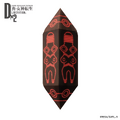 Render from Shin Megami Tensei: Liberation Dx2
 -
 Render from Persona 5 Royal
 -
 Sprite from Shin Megami Tensei IV
 -
 Sprite from Shin Megami Tensei: Synchronicity Prologue
 -
 Sprite from the PlayStation version of Devil Summoner: Soul Hackers
 -
 Sprite from the Nintendo 3DS version of Devil Summoner: Soul Hackers
 -
 Sprite from Devil Survivor 2
 -
 Sprite from Devil Survivor 2: Record Breaker
 -
 Icon from Shin Megami Tensei V
 -
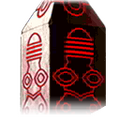 Portrait graphic from Shin Megami Tensei: Liberation Dx2
 -
 Card graphic from Persona 3
 -
 Graphic from Persona 3 Portable
 -
 Graphic from Persona 3 Reload
 -
 Card graphic from Persona 4
 -
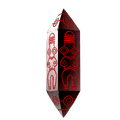 Graphic from Persona 4 Golden
 -
 Graphic from Persona Q: Shadow of the Labyrinth
 -
 Graphic from Persona Q2: New Cinema Labyrinth
 -
 Battle icon from Persona 5: The Phantom X
 -
 Icon from Devil Survivor 2
 -
 Graphic from Devil Survivor 2: Record Breaker
 -
 Icon from Devil Survivor 2: Record Breaker
 -
 Model from Persona 3
 -
 Model from Persona 3 Reload


Videos
Notes
References
- ↑ Histories 3.8, Herodotus. Greek.
- Demons from Arab Culture
- Demons in Shin Megami Tensei: Strange Journey
- Demons in Shin Megami Tensei: Strange Journey Redux
- Demons in Shin Megami Tensei IV
- Demons in Shin Megami Tensei IV: Apocalypse
- Demons in Shin Megami Tensei V
- Demons in Shin Megami Tensei V: Vengeance
- Demons in Shin Megami Tensei: Imagine
- Enemies in Shin Megami Tensei: Synchronicity Prologue
- Guardians in Shin Megami Tensei: J
- Demons in Shin Megami Tensei: Liberation Dx2
- Demons in Devil Summoner: Soul Hackers
- Personas in Persona 3
- Personas in Persona 3 FES
- Personas in Persona 3 Portable
- Personas in Persona 3 Reload
- Personas in Persona 4
- Personas in Persona 4 Golden
- Personas in Persona 5 Royal
- Shadows in Persona 5 Royal
- Personas in Persona Q: Shadow of the Labyrinth
- Personas in Persona Q2: New Cinema Labyrinth
- Personas in Persona 5 Tactica
- Shadows in Persona 5: The Phantom X
- Personas in Persona Mobile Online
- Demons in Digital Devil Saga: Avatar Tuner 2
- Demons in Devil Survivor 2
- Demons in Devil Survivor 2: Record Breaker
- Demons in Kētai Akuma Densho