Zhen

Zhen is a Demon in the Megami Tensei franchise.
Profile
Origin

Zhenniao,[a] also known as simply Zhen,[b] especially in classical texts, is a bird in Chinese folklore said to have deadly poisonous feathers. It is described as a black, goose-like animal with red eyes and a beak 7-8 寸 cun long. Male Zhen are called Huiyang,[c] Female Zhen are called Yinyun.[d][1] A Huiyang's call is called yunri,[e] and said to clear the weather; a Yinyun's call is called yinxie[f] and said to bring rain.[2]
In the Classic of Mountains and Seas,[g] Zhen is said to live in the Jade Mountain,[3][h] where it gets its poison from consuming vipers; they additionally consume acorns and various insects.[4] It does so through waiting outside their caves and ambushing them as they come out, similar to a secretary bird.[5] By plucking Zhen's feathers[i] and dipping them in wine, one can induce "Zhen Poisoning," known in Chinese as 鴆/鸩毒 zhèndú. However, merely touching its feathers induces gangrene, so using silver tongs is required to pluck them. Only the horn of a rhinoceros can cure its severe toxins.[5] A parable between Zhen and its prey is mentioned in the Tang Daoist text Wunengzi,[j] which describes the perception of Zhen as an evil, but misunderstood figure. When hunting a snake, it is called on being poisonous, and therefore being evil; However, Zhen retorts that it is the snake's poison that it uses, and that it itself does not kill people, but those who hunt it for its poison do. Therefore, Zhen is not necessarily to blame for the death it brings, and could even be considered a virtuous protector of people for consuming snakes that do bite people and bearing its evil reputation.[6]
It is thought that Zhen was a real bird at some point, given several contemporary birds can gain poison in a similar way to what was described in classical texts.[7] The last recorded sighting dates back to the 宋 Sòng Dynasty, where it was described as living in what is now modern-day Guangxi.[k][5]
The poison of Zhen was so infamous that two idioms arose:
- 飲鴆止渴 / 饮鸩止渴 yǐnzhènzhǐkě - Drinking the poison of Zhen to quench one's thirst; to take a remedy that only worsens one's situation.
- 宴安鸩毒 / 宴安鴆毒 yàn'ān-zhèndú - To feast on pleasure is like drinking wine poisoned by Zhen; sometimes used to describe a ruler indulging in pleasure to ruin a country.
Design
Zhen is depicted with a seahorse-like design. According to Kazuma Kaneko, he finds designing bird demons to be difficult, but he tried to make the feathers look poisonous.[8]
Gameplay
- For complete gameplay information, see Gameplay:Zhen.
Compendium

|
This compendium section is a stub. You can help Megami Tensei Wiki by expanding it. |
| Reason: Dx2 and SMTI entries |

|
This section has content in need of translation. |
| The content in this section is missing a translation. You can help Megami Tensei Wiki by adding one. |
| Compendium Entries | |
|---|---|
| Shin Megami Tensei III: Nocturne |
A bird in Chinese mythology said to have poison in its feathers, because it eats poisonous snakes. Dipping a feather into wine will turn it into a deadly poison, able to kill anyone with one drop. |
| Shin Megami Tensei III: Nocturne HD Remaster | |
| Shin Megami Tensei: Strange Journey |
A highly poisonous bird of Chinese lore. It likes to eat snakes with its copper-colored beak. It carries an incredibly potent venom; if it travels over a field, all the crops below will wither, and if one of its feathers falls into a drink, a single sip can kill a man. |
| Shin Megami Tensei IV |
A highly poisonous bird of Chinese lore. It likes to eat snakes with its copper-colored beak. It carries an incredibly potent venom; if it travels over a field, all the crops below will wither, and if one of its feathers falls into a drink, a single sip can kill a man. |
| Shin Megami Tensei IV: Apocalypse |
A highly poisonous bird of Chinese lore. |
| Shin Megami Tensei V |
A bird in Chinese mythology said to have poison in its feathers because it eats poisonous snakes. Dipping a feather into wine will turn it into a deadly poison, able to kill anyone with a single drop. |
| Shin Megami Tensei V: Vengeance | |
| Shin Megami Tensei: Devil Summoner(Akuma Zensho; PSP) |
出身地:中国 鴆。体中に猛毒をもつとされる鳥。その羽でかき混ぜた酒で人が殺せるといわれる。 チンの身体の大きさは鷲くらいで、紫がかった緑の羽に包まれている。その首は長く、くちばしは赤い色をしている。 チンが好んで食べるのはマムシなどの蛇の頭で、このために全身に毒を持つといわれる。 雄と雌とでそれぞれ違う呼び名がついており、雄は雲日(ウンジツ)、雌は陰諧(インカイ)という。Translation: Place of origin: China |
| Soul Hackers 2 |
A bird in Chinese mythology said to have poison in its feathers because it eats poisonous snakes. Dipping a feather into wine will turn it into a deadly poison, able to kill anyone with one drop. |
| Kētai Akuma Densho |
体中に猛毒を持つとされる鳥。その羽でかき混ぜた酒で人が殺せると言われる。 出身地:中国チンの身体の大きさは鷲くらいで、紫がかった緑の羽に包まれている。その首は長く、くちばしは赤い色をしている。チンが好んで食べるのはマムシなどの蛇の頭で、このために全身に毒を持つと言われる。雄と雌とでそれぞれ違う呼び名がついており、雄は雲日(ウンジツ)、雌は陰諧(インカイ)と言う。Translation: A bird thought to bear a deadly poison throughout its whole body. It is said that person can be killed using wine stirred with its feather. Place of origin: China |
Nomenclature
Originally a word meaning "poisoned wine", derived from the Old Chinese exopassive form of the verb 沈 chén ("to poison a liquid").
| Language | Name | Meaning |
|---|---|---|
 English English
|
Zhen | |
 Japanese Japanese
|
チン Chin | Zhen. Sino-Japanese pronunciation of the Chinese character 鴆. |
 Simplified Chinese Simplified Chinese
|
鸩 Shin Megami Tensei III: Nocturne HD Remaster Shin Megami Tensei III: Nocturne HD RemasterShin Megami Tensei V: Vengeance Soul Hackers 2 Zhèn | |
   Traditional Chinese Traditional Chinese
|
鴆Shin Megami Tensei V: Vengeance Soul Hackers 2 Zhèn | |
 French French
|
Zhen | |
 German German
|
Zhen | |
 Italian Italian
|
Zhen | |
 Korean Korean
|
젠Shin Megami Tensei III: Nocturne Shin Megami Tensei III: Nocturne HD Remaster Shin Megami Tensei V Soul Hackers 2 Jen |
Zhen |
| 친Shin Megami Tensei IV Digital Devil Saga: Avatar Tuner 2 Chin |
Korean transliteration of Japanese: チンZhen, romanized Chin | |
 Polish Polish
|
Zhen | |
 Brazilian Portuguese Brazilian Portuguese
|
Zhen | |
 Russian Russian
|
Чжэнь-няо Chzh·en’-nyao | Palladius cyrillization of Simplified Chinese: 鴆鳥Zhenniao (lit. "Zhen Bird"), Traditional Chinese: 鸩鸟Zhenniao (lit. "Zhen Bird"), romanized Zhèn-niǎo |
 Peninsular Spanish Peninsular Spanish
|
Zhen | |
 Turkish Turkish
|
Zhen | |
Gallery
-
 Artwork from Shin Megami Tensei: Devil Summoner
 -
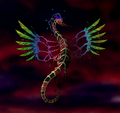 Render from Shin Megami Tensei: Devil Summoner: Akuma Zensho
 -
 Sprite from Shin Megami Tensei IV
 -
 Sprite from the Sega Saturn version of Shin Megami Tensei: Devil Summoner
 -
 Sprite from Shin Megami Tensei Trading Card: Card Summoner
 -
 RTS icon from Shin Megami Tensei: Nine
 -
 Icon from Shin Megami Tensei V
 -
 Icon from Soul Hackers 2
 -
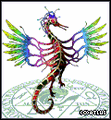 Card graphic from Kētai Akuma Densho
 -
 Model from Shin Megami Tensei: Nine
 -
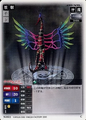 Card N-063 from Shin Megami Tensei Card Game: Nocturne Ver.


Videos
Notes
- ↑ Simplified Chinese: 鸩鸟, Traditional Chinese: 鴆鳥, romanized zhènniǎo
- ↑ Simplified Chinese: 鸩, Traditional Chinese: 鴆, romanized zhèn
- ↑ Simplified Chinese: 回阳, Traditional Chinese: 迴陽, romanized huí yáng
- ↑ Simplified Chinese: 阴氲, Traditional Chinese: 陰氳, romanized yīn yūn
- ↑ Simplified Chinese: 运日, Traditional Chinese: 運日, romanized yùn rì
- ↑ Simplified Chinese: 阴谐, Traditional Chinese: 陰諧, romanized yīn xié
- ↑ Simplified Chinese: 山海经, Traditional Chinese: 山海經, romanized Shānhǎijīng
- ↑ Simplified Chinese: 玉山, Traditional Chinese: 玉山, romanized yùshān
- ↑ Simplified Chinese: 鸩羽, Traditional Chinese: 鴆羽, romanized zhènyǔ
- ↑ Simplified Chinese: 无能子, Traditional Chinese: 無能子, romanized Wúnéng zǐ
- ↑ Simplified Chinese: 广西, Traditional Chinese: 广西, romanized Guǎngxī
References
- ↑ 2020. 山海經 Berkeley, California:University of California Press ISBN 978-0-520-21844-4
- ↑ 《尔雅翼》: 雄鸟叫运日,雌鸟叫阴谐,运日叫则天晴,阴谐叫则下雨。
- ↑ Zhongquan, Miao, ed. 2018. 山海经 [Shānhǎijīng]. Simplified Chinese ed. Shenyang: 万卷出版公司 [Wanjuan Publishing Company].
- ↑ 《山海经》:又东北二百里,曰玉山,其阳多铜,其阴多赤金,其木多豫章、楢、杻,其兽多豕、鹿、羚、㚟,其鸟多鸩。《山海经》:又东南二百里,曰琴鼓之山,其木多榖、柞、椒、柘;其上多白珉,其下多洗石;其兽多豕、鹿,多白犀;其鸟多鸩。 《山海经》:又东六十里,曰瑶碧之山,其木多梓、枏,其阴多青雘,其阳多白金。有鸟焉,其状如雉,恒食蜚,名曰鸩。 《山海经》:又东北百二十里,曰女几之山,其上多玉,其下多黄金,其兽多豹、虎,多闾、麋、麖、麂,其鸟多白鷮,多翟,多鸩。
- ↑ 5.0 5.1 5.2 《嶺外代答卷八》:邕州溪峒深山有鴆鳥,形如鵶而差大,黑身紅目,音如羯鼓,唯食毒蛇。鴆禹步遇蛇,其聲邦邦然,蛇入石穴,鴆于穴外禹步,有頃石碎,吞之。凡山有鴆,草木悉枯,鴆集于石,其石必裂。或云鴆秋冬脱羽,人以銀作爪勾取,致之銀甁,否則手爛。欲加鴆于人,以一羽致酒卽死。
- ↑ de Meyer, Jan. 2023. Discourse on the Poison Bird [鴆說] in Master Incapable: A Medieval Daoist on the Liberation of the Mind [無能子]. Oxford University Press. pp. 89. ISBN: 978-0-19-760-327-7.
- ↑ https://web.archive.org/web/20070927220236/http://www.ceps.com.tw/ec/ecjnlarticleView.aspx?atliid=597752&issueiid=40992&jnliid=1958
- ↑ "鳥系の悪魔って描き分けが難しいんですよね。みんな同じになっちゃうんで。これは毒を持つ鳥という伝承くらいしかなかったんで、羽を毒々しく彩ってみました。タツノオトシゴの格好にしたのは自分的に作ってみたイメージですね。(金子)" Shin Megami Tensei: Devil Summoner World Guidance (1996), Daisuke Narisawa and CB's Project. Published by SoftBank. Japanese. p. 34. ISBN-13: 978-4-7973-0084-0.
- Pages with section stubs
- Pages with compendium section stubs
- Pages needing translations
- Demons from Chinese Culture
- Demons in Shin Megami Tensei: Nine
- Demons in Shin Megami Tensei III: Nocturne
- Demons in Shin Megami Tensei III: Nocturne Maniax
- Demons in Shin Megami Tensei: Strange Journey
- Demons in Shin Megami Tensei: Strange Journey Redux
- Demons in Shin Megami Tensei IV
- Demons in Shin Megami Tensei IV: Apocalypse
- Demons in Shin Megami Tensei V
- Demons in Shin Megami Tensei V: Vengeance
- Demons in Shin Megami Tensei: Imagine
- Demons in Shin Megami Tensei: Devil Summoner
- Demons in Soul Hackers 2
- Demons in Shin Megami Tensei Pinball: Judgment
- Demons in Digital Devil Saga: Avatar Tuner 2
- Demons in Shin Megami Tensei Trading Card: Card Summoner
- Demons in Kētai Akuma Densho