Qilin

|
This article is in need of image(s). You can help Megami Tensei Wiki by uploading one. |
| Reason: Last Bible artwork |
| Qilin | |
| キリン | |
SMT1 SFCDCBRDCWDCLD
SFC artwork from Shin Megami Tensei
Artwork from Devil Children Black Book and Red Book
Artwork from Devil Children White Book
Artwork from Devil Children Light Book and Dark Book | |
| Other Name(s) | Kirin Shin Megami Tensei: Imagine Shin Megami Tensei: ImagineKyra DemiKids Light Version and Dark Version |
| Origin | Chinese culture Confucianism |
| Race(s) | AvatarMajin Tensei Majin Tensei: Blind Thinker God Devil Children Black Book and Red BookDevil Children White Book Holy Digital Devil Story: Megami Tensei IIKyūyaku Megami Tensei Shin Megami Tensei Shin Megami Tensei: Nine Shin Megami Tensei: Imagine Shin Megami Tensei: Tokyo Requiem Majin Tensei II: Spiral Nemesis Kemono Devil Children Light Book and Dark BookDevil Children Fire Book and Ice Book |
| Alignment(s) | GoodDigital Devil Story: Megami Tensei II Light-Law Shin Megami TenseiShin Megami Tensei: Tokyo Requiem Light-Neutral Shin Megami Tensei: NineNeutral-Neutral Majin Tensei II: Spiral Nemesis |


Qilin is a Demon in the Megami Tensei franchise.
Profile
Origin
Qilin[a] is one of the Four Holy Beasts[b] mentioned in various Confucian texts, including but not limited to the Classic of Poetry,[c] the Book of Rites,[d] Confucius's Spring and Autumn[e] and Zuo Zhuan.[f] According to Shuowen Jiezi,[g] 麒 qí represents a benevolent beast and 麟 lín represents a large male deer. However, these characters were later re-interpreted to represent male and female genders, respectively, and have now been merged to mean one animal, similar to Fenghuang.[1] Traditionally, Shuowen Jiezi describes Qí as being a benevolent animal with a deer's body, ox's tail, and a single horn. The sound comes from 鹿 qí.[2] This description would go on to serve as the canonical description for the beast in general.
In Confucius's Spring and Autumn Annals, it is said that Duke Ai of Lu[h] captured a Qilin.[3] This is expanded upon in Zuo Zhuan, where it is said to have then been identified by Confucius such.[4] In Records of the Grand Historian, whilst mourning the deaths of contemporaries Dou Mingdu[i] and Shun Hua,[j] Confucius states to his disciple Zigong[k] that if one destroys animals or kills young game, the Qilin would not come to the countryside.[5]
In the Classic of Poetry (11-7th Century B.C.), a poetry anthology allegedly compiled by Confucius and one of the oldest representations of Classical Chinese, the Qilin is mentioned in a dedicated poem dubbed "The Qilin's Hoof":[l][6]
麟之趾,振振公子,于嗟麟兮。
The feet of the Qilin, the noble sons of our lord. Ah, the Qilin!
麟之定,振振公姓,于嗟麟兮。
The forehead of the Qilin, the noble kinsmen of our lord. Ah, the Qilin!
麟之角,振振公族,于嗟麟兮。
The horn of the Qilin, the noble clansmen of our lord. Ah, the Qilin!
The poem, using the orthodox male meaning, presents the Qilin as a being of nobility and benevolence. Each part of its body is being used as an allegory for different levels of said nobility.
Qilin is said to appear during times of imminent birth or death of a particularly notable sage or ruler. Being part of the Four Holy Beasts, Qilin is paired with Fenghuang, Tortoise, and Dragon.[7]
Design
,_illustration_from_kinm%C5%8D_zui.jpg)
Qilin's Shin Megami Tensei design resembles Japanese depictions of the qilin (pronounced kirin in Japanese).
Gameplay

|
This gameplay section is a stub. You can help Megami Tensei Wiki by expanding it. |
| No reason provided. |
Shin Megami Tensei
|
|
| ||||||||||||||||||||||||||||||||||||||||||||||||||||||||||||||
| ||||||||||||||||||||||||||||||||||||||||||||||||||||||||||||||||
| ||||||||||||||||||||||||||||||||||||||||||||||||||||||||||||||||
| ||||||||||||||||||||||||||||||||||||||||||||||||||||||||||||||||
| ||||||||||||||||||||||||||||||||||||||||||||||||||||||||||||||||


Compendium

|
This section has content in need of translation. |
| The content in this section is missing a translation. You can help Megami Tensei Wiki by adding one. |
| Compendium Entries | |
|---|---|
| Shin Megami Tensei(A-Mode DDS) |
Origin: China |
| Devil Children Black Book and Red Book | GBC: おおぞらをかける とてもしんせいな ケモノのおうさま カミナリとともに あらわれるPS: 大空をかける とても神聖な ケモノの王様 雷とともに現れるTranslation: |
| Devil Children White Book | おおぞらをかける とてもしんせいな ケモノのおうさま カミナリとともに あらわれるTranslation: |
| Devil Children Light Book and Dark Book | 1日に 何千キロも 走ることができる 神聖なケモノの 王様 雷とともにあらわれる ひたいの 角が トレードマークTranslation: |
| DemiKids Light Version and Dark Version |
This one-horned demon has the speed to cover thousands of miles in a single day. |
| Devil Children Fire Book and Ice Book | 1日に 何千キロも 走ることができる 神聖なケモノの 王様 雷とともにあらわれる ひたいの 角が トレードマークTranslation: |
Nomenclature
| Language | Name | Meaning |
|---|---|---|
 English English
|
QilinShin Megami Tensei | |
| KirinShin Megami Tensei: Imagine | ||
| KyraDemiKids Light Version and Dark Version | ||
 Japanese Japanese
|
キリン Kirin | Japanese reading of Chinese 麒麟 qílín |
| 麒麟Shin Megami Tensei (Mega-CD) Kirin |
Kanji rendering of the above | |
 Simplified Chinese Simplified Chinese
|
麒麟 Qílín | |
   Traditional Chinese Traditional Chinese
|
麒麟 Qílín | |
 Korean Korean
|
기린麒麟DeviChil |
Sino-Korean reading of Chinese 麒麟 |
Gallery
-
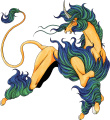 Artwork from the Super Famicom version of Shin Megami Tensei
 -
 Artwork from Devil Children Black Book and Red Book
 -
 Artwork from Devil Children White Book
 -
 Artwork from Devil Children Light Book and Dark Book
 -
 Sprite from Digital Devil Story: Megami Tensei II
 -
 Animated sprite from Digital Devil Story: Megami Tensei II
 -
 Sprite from Kyūyaku Megami Tensei
 -
 Animated sprite from Kyūyaku Megami Tensei
 -
 Sprite from the Super Famicom version of Shin Megami Tensei
 -
 Sprite from the Mega-CD version of Shin Megami Tensei
 -
 Sprite from the PlayStation version of Shin Megami Tensei
 -
 Sprite from the Game Boy version of Last Bible
 -
 Sprite from the Game Boy Color version of Last Bible
 -
 Sprite from the Game Gear version of Last Bible
 -
 Sprite from the Game Boy version of Last Bible II
 -
 Sprite from the Game Boy Color version of Last Bible II
 -
 Sprite from Last Bible III
 -
 Sprite from Shinyaku Last Bible
 -
 Sprite from Shinyaku Last Bible II: Hajimari no Fukuin
 -
 Sprite from Shinyaku Last Bible III: Mugen no Eiyū
 -
 Sprite from Majin Tensei
 -
 Sprite from Majin Tensei II: Spiral Nemesis
 -
 Sprite from the Game Boy Color version of Devil Children Black Book and Red Book
 -
 Sprite from the PlayStation version of Devil Children Black Book and Red Book
 -
 Sprite from Devil Children White Book
 -
 Sprite from Devil Children Light Book and Dark Book and Devil Children Fire Book and Ice Book
 -
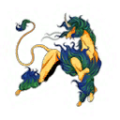 RTS icon from Shin Megami Tensei: Nine
 -
 Model from Shin Megami Tensei: Nine
 -
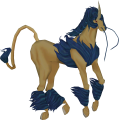 Model from Shin Megami Tensei: Imagine
 -
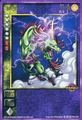 Card FW-020 from Shin Megami Tensei Devil Children Card Game: Byakusei no Monshou


Notes
- ↑ Simplified Chinese: 麒麟, Traditional Chinese: 麒麟, romanized Qílín
- ↑ Simplified Chinese: 四灵, Traditional Chinese: 四靈, romanized Sìlíng
- ↑ Simplified Chinese: 诗经, Traditional Chinese: 詩經, romanized Shījīng
- ↑ Simplified Chinese: 礼记, Traditional Chinese: 禮記, romanized Lǐjì
- ↑ Chinese: 春秋, romanized Chūnqiū
- ↑ Simplified Chinese: 左传, Traditional Chinese: 左傳, romanized zuǒ zhuàn
- ↑ Simplified Chinese: 说文解字, Traditional Chinese: 說文解字, romanized Shuōwén Jiězì
- ↑ Simplified Chinese: 鲁哀公, Traditional Chinese: 魯哀公, romanized lǔ āigōng
- ↑ Simplified Chinese: 窦鸣犊, Traditional Chinese: 竇鳴犢, romanized Dòu Míngdù
- ↑ Simplified Chinese: 舜华, Traditional Chinese: 舜華, romanized Shùn Huá
- ↑ Simplified Chinese: 子贡, Traditional Chinese: 子貢, romanized Zǐ Gòng
- ↑ Chinese: 麟之趾, romanized lín zhī zhǐ
References
- ↑ Xu S.Z. (2015). 說文解字註 [Shuōwén Jiězì Zhù] (Duan, Y.C. & Xu, W.X. eds.). 鳳凰出版社 [Phoenix Media]. ISBN: 978-7-5506-2167-1
- ↑ 《說文解字》: 渠之切麒仁獸也。麋身牛尾,一角。从鹿其聲。
- ↑ Kong, Q. (Sun J.J., ed.). 2016. 春秋. Jinlin Wenshi Chubanshe. ISBN: 978-5472-3079-4.
- ↑ Zuo, Q.M. (2018). 左传 [The Spring and Autumn Annals with Zuo Zhuan] (Legge, J., Shi, Y.H. & Zhang Q., transl.). 中州古籍出版社 [Zhongzhou Ancient Books Publishing House].
- ↑ Sima, Q. (An, P. Q, Yang, X.Y, & Yang, G. Transl.) 史记选 [Selected Records of the Historian], vol. I. 外文出版社[Foreign Languages Press]. ISBN: 978-7-119-05090-4. pp. 246-249.
- ↑ Kong, Qiu. Eds.(2016). 诗经 [The She King] (Legge, J. & Shi J.H. Transl.). 中州古籍出版社 [Zhongzhou Ancient Books Publishing House]. ISBN: 978-7-5348-6422-3.
- ↑ Dai, S. (2018). 礼记 [The Book of Rites] (Legge, J., Ma, J.Z. & Li L.W., transl.). 中州古籍出版社 [Zhongzhou Ancient Books Publishing House].
- Pages needing images
- Pages with section stubs
- Pages with gameplay section stubs
- Pages needing translations
- Demons from Chinese Culture
- Demons from Confucianism
- Demons in Digital Devil Story: Megami Tensei II
- Demons in Kyūyaku Megami Tensei
- Demons in Shin Megami Tensei (Game)
- Demons in Shin Megami Tensei: Nine
- Demons in Shin Megami Tensei: Imagine
- Demons in Shin Megami Tensei: Tokyo Requiem
- Beasts in Last Bible (Game)
- Beasts in Last Bible II
- Beasts in Last Bible III
- Beasts in Shinyaku Last Bible
- Beasts in Shinyaku Last Bible II: Hajimari no Fukuin
- Beasts in Shinyaku Last Bible III: Mugen no Eiyū
- Demons in Majin Tensei (Game)
- Demons in Majin Tensei II: Spiral Nemesis
- Demons in Majin Tensei: Blind Thinker
- Demons in Devil Children Black Book and Red Book
- Demons in Devil Children White Book
- Demons in Devil Children Light Book and Dark Book
- Demons in Devil Children Fire Book and Ice Book