Berserker

|
This demon page is a stub. You can help Megami Tensei Wiki by expanding it. |
| Reason: Missing profile information and compendium entries. |


Berserker is a Demon in the Megami Tensei franchise.
Profile
Origin
A berserkr (plural: berserkir), anglicized as "berserker", is a term used in medieval Norse literature that is first attested in a poem by the Icelandic skald Þorbjǫrn Hornklofi.[1] The etymology of berserkr is disputed, and it may mean either "bearshirt" or "bareshirt".[2] Russian linguist and folklorist Anatoly Liberman (2015) considers "bareshirt" to be more plausible.[3]
The first known detailed account of berserkers is found in Snorri Sturluson's Heimskringla: they were men of Odin who fought without armor and acted like crazed beasts. They had immense strength and were immune to both fire and iron.[4]
More commonly, Icelandic sagas narrate several stories with a common structure: a band of berserkers raided a farm during Christmastide while the farmer was either ill or away in Norway; these marauders were defeated by a brave Icelander who was visiting, and the Icelander received lavish rewards in recompense.[4] The berserkers' immunity to fire was said to be a spell that could be broken by Christian missionaries, and while they were supposedly immune to blades, they could be bludgeoned to death.[5]
Snorri's association of berserkers with Odin in the Heimskringla is unusual and has no support in other texts. Snorri most likely projected contemporary tales of the marauding berserkers into the mythic past for literary purposes.[6]
According to the Grettis saga, berserkers were outlawed in Norway by Eiríkr Hákonarson in 1012, which may have caused these raiders to migrate to Iceland and become the source of the folk stories.[7]
Design

|
This design section is a stub. You can help Megami Tensei Wiki by expanding it. |
| No reason provided. |
Gameplay
- For complete gameplay information, see Gameplay:Berserker.
Compendium

|
This section has content in need of translation. |
| The content in this section is missing a translation. You can help Megami Tensei Wiki by adding one. |
| Compendium Entries | |
|---|---|
| Shin Megami Tensei: Strange Journey |
Fierce warriors of Norse origin who fight heedlessly and without fear. Their name comes from their bear-skin coats. They are also the warriors of Odin. |
| Shin Megami Tensei IV |
Fierce warriors of Norse origin who fight heedlessly and without fear. Their name comes from their bearskin coats. They are also warriors of Odin. |
| Shin Megami Tensei IV: Apocalypse |
Fierce warriors of Norse origin who fight heedlessly and without fear. |
| Shin Megami Tensei: Liberation Dx2 |
Fierce Norse warriors who fight heedlessly and without fear. In battle their blood boils, attacking friend and foe with blind ferocity. Their name comes from the bearskin coats they adorn and are the warriors of Odin. |
| Shin Megami Tensei: Devil Summoner(Akuma Zensho; PSP) |
出身地:北欧 北欧の猛戦士。戦闘の興奮で我を忘れ、何者に対してでも恐怖を覚えることなく向かっていく。 ベルセルクは動物の毛皮をまとって戦う戦士である。その多くが熊の毛皮だったことは、彼らの名前自体が「熊の毛皮を着る者」であることから明らかである。 このベルセルクたちは、オーディン神の戦士でもある。よって彼らには、オーディン神の特別な加護があると信じられている。Translation: Place of origin: Northern EuropeCrazed warriors of Northern Europe. They lose themselves in the frenzy of battle and face their opponents without fear. Berserkers are warriors who fight wearing animal skins. The fact that most of them wore bearskins is evident in their name, which means "wearers of bearskins". Additionally, the Berserkers are warriors of the god Odin. As such, it is believed that they have the god Odin's special protection. |
| Devil Summoner: Soul Hackers(3DS) |
Fierce warriors of Norse origin who fight heedlessly and without fear. Their name comes from their bearskin coats that they wear when fighting. They are also warriors of Odin. |
| Persona 2: Eternal Punishment |
A mad Celtic warrior, better known as "Berserk". |
| Persona Q2: New Cinema Labyrinth |
Fierce warriors of Norse origin who fight heedlessly and without fear. Their name comes from their bearskin coats. They are also warriors of Odin. |
| Devil Children Light Book and Dark Book |
クマの毛皮を きて あばれまわる キョウボウな 戦士 戦いが 終わるまでは どんな事があっても たおれる事はないTranslation: A ferocious, rampaging warrior clad in a bearskin. Will not fall until the battle is over, no matter what happens. |
| DemiKids Light Version and Dark Version |
A fierce and violent warrior that cannot be stopped once he is on the rampage. |
| Devil Children Fire Book and Ice Book |
クマの毛皮を着て あばれまわる キョウボウな 戦士 戦いが 終わるまでは どんな事があっても たおれる事はないTranslation: A ferocious, rampaging warrior clad in a bearskin. Will not fall until the battle is over, no matter what happens. |
| Devil Survivor: Overclocked |
Fierce warriors of Norse origin who fight heedlessly and without fear. Their name comes from their bearskin coats that they wear when fighting. They are also warriors of Odin. |
| Devil Survivor 2: Record Breaker |
Fierce warriors of Norse origin who fight heedlessly and without fear. Their name comes from their bearskin coats that they wear when fighting. They are also warriors of Odin. |
| Kētai Akuma Densho |
北欧神話に登場する狂戦士。自分自身に自己暗示をかけることにより、凶暴な戦闘能力を発揮する。 出身地:北欧北欧神話の、主神オーディンの加護を受けた獰猛な戦士達。彼らは戦闘時の極度の興奮によって忘我の境地に入り、凶暴な戦闘能力を発揮すると言われている。熱狂的な戦闘心に支配されている状態の彼らは、恐怖をも感じなくなり、戦いに没頭し続けるとされる。ベルセルクの名の語源は、古代北欧語の「熊の毛皮を着た者」から来ているとされ、英語では「バーサーカー(狂戦士)」とも呼ばれている。Translation: |
| Kaneko Kazuma Dennō Akuma Zukan | 主神オーディンの戦士たち。神の力をもって傷を負うことがないと信じて鎖かたびらなどの防具を身につけることもなく、まるで陶酔しているように戦うという。日本語で「狂戦士」と訳される由縁だ。また、熊や狼など動物の毛皮を被ることでその動物の力を得て戦うともされる。Translation: Warriors of the chief deity Odin. Believing the power of gods will protect them from injury, they are said to wear no protective armor such as chainmail, and fight as though in a state of intoxication. For this reason, they are known in Japanese by the translation "mad warriors". It is also believed that by wearing the pelts of animals such as bears and wolves, they gain the strength of those animals when fighting. |
Nomenclature
| Language | Name | Meaning |
|---|---|---|
 English English
|
Berserker | |
Berserk Persona 2: Eternal Punishment Persona 2: Eternal Punishment | ||
| BerzerkDemiKids Light Version and Dark Version | ||
 Japanese Japanese
|
ベルセルク Beruseruku | Berserk; from Old Norse berserkʀ |
 Korean Korean
|
베르세르크 Bereusereukeu | Berserk |
Gallery
-
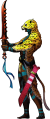 Artwork from Shin Megami Tensei: Devil Summoner
 -
 Artwork from Devil Summoner: Soul Hackers
 -
 Artwork from Devil Children Light Book and Dark Book
 -
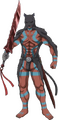 Artwork from Devil Survivor 2 The Animation
 -
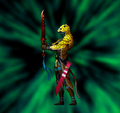 Render from Shin Megami Tensei: Devil Summoner: Akuma Zensho
 -
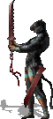 Sprite from Shin Megami Tensei IV
 -
 Sprite from the Sega Saturn version of Shin Megami Tensei: Devil Summoner
 -
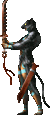 Sprite from the PlayStation version of Devil Summoner: Soul Hackers
 -
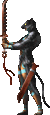 Sprite from the Nintendo 3DS version of Devil Summoner: Soul Hackers
 -
 Sprite from Persona 2: Eternal Punishment
 -
 Sprite from Devil Children Light Book and Dark Book and Devil Children Fire Book and Ice Book
 -
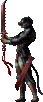 Sprite from Devil Survivor
 -
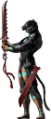 Sprite from Devil Survivor: Overclocked
 -
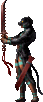 Sprite from Devil Survivor 2
 -
 Sprite from Shin Megami Tensei Trading Card: Card Summoner
 -
 Graphic from Persona Q2: New Cinema Labyrinth
 -
 Icon from Devil Survivor
 -
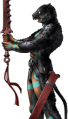 Graphic from Devil Survivor: Overclocked
 -
 Icon from Devil Survivor: Overclocked
 -
 Icon from Devil Survivor 2
 -
 Icon from Devil Survivor 2: Record Breaker
 -
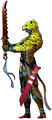 Graphic of Berserker's Shin Megami Tensei: Devil Summoner design from Kaneko Kazuma Dennō Akuma Zukan
 -
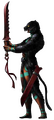 Graphic of Berserker's Devil Summoner: Soul Hackers design from Kaneko Kazuma Dennō Akuma Zukan
 -
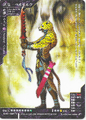 Card DS-027 from Shin Megami Tensei Card Game: Devil Summoner World


References
- General
- "Óðinn's Berserks in Myth and Human Berserks in Reality", In Prayer and Laughter: Essays on Medieval Scandinavian and Germanic Mythology, Literature, and Culture (2015). Published by Paleograph Press. pp. 101-112. ISBN-13: 978-5-89526-027-2.
- Specific
- ↑ Liberman 2015, p. 101.
- ↑ Liberman 2015, p. 103.
- ↑ Liberman 2015, pp. 104, 110.
- ↑ 4.0 4.1 Liberman 2015, p. 102.
- ↑ Liberman 2015, pp. 102-103.
- ↑ Liberman 2015, pp. 107-108.
- ↑ Liberman 2015, p. 108.
- Stubs
- Demon Stubs
- Pages with section stubs
- Pages with design section stubs
- Pages needing translations
- Demons from Norse Culture
- Demons in Shin Megami Tensei: Strange Journey
- Demons in Shin Megami Tensei: Strange Journey Redux
- Demons in Shin Megami Tensei IV
- Bosses in Shin Megami Tensei IV
- Demons in Shin Megami Tensei IV: Apocalypse
- Demons in Shin Megami Tensei: Liberation Dx2
- Demons in Shin Megami Tensei: Devil Summoner
- Demons in Devil Summoner: Soul Hackers
- Demons in Persona 2: Eternal Punishment
- Personas in Persona Q2: New Cinema Labyrinth
- Demons in Devil Children Light Book and Dark Book
- Demons in Devil Children Fire Book and Ice Book
- Demons in Devil Children: Messiah Riser
- Demons in Devil Survivor (Game)
- Demons in Devil Survivor: Overclocked
- Demons in Devil Survivor 2
- Demons in Devil Survivor 2: Record Breaker
- Demons in Shin Megami Tensei Trading Card: Card Summoner
- Demons in Kētai Akuma Densho
- Demons in Kaneko Kazuma Dennō Akuma Zukan