The Shedim[a] are a type of Shadow appearing in Persona 5: The Phantom X.
Profile
Origin
In Jewish thought, shedim[b] are a type of entity commonly glossed as "demons". The term appears twice in the Hebrew Bible (Deuteronomy 32:17 and Psalm 105:37) and likely originally referred to foreign deities. Shedim are elaborated upon in Jewish midrashim.
Among Hellenistic Jews, the shedim were called δαιμόνια daimónia in Greek, whence the English term "demon".
Design

|
This design section is a stub. You can help Megami Tensei Wiki by expanding it.
|
| No reason provided.
|
Gameplay
|
|
| Name
|
Level
|
HP
|
| Wraith of Envy
|
64
|
111076
|
|
|
|
|
| Resistances
|

|

|

|

|

|

|

|

|

|

|
| —
|
—
|
—
|
—
|
—
|
—
|
—
|
—
|
—
|
—
|
|
| Skills
|
| Skill
|
Description
|
 Gigantomachia Gigantomachia
|
Deal Physical damage to all foes equal to x% of Attack.
|
 Charge Charge
|
Increase Physical and Gun damage (excluding 1 More) by x% for 1 turn.
|
 Dark Whisper Dark Whisper
|
Deal Curse damage to all foes, with a chance to inflict 1 Curse.
|
 Voidal Torrent Voidal Torrent
|
Deal Almighty damage to 1 foe equal to x% of Attack, ignoring their Defense.
|
|
Compendium
| Compendium Entries
|
| Persona 5: The Phantom X
|
메멘토스에 출몰하는 이형 섀도로, 무섭게 생긴 데 다 매우 위험합니다. 현실의 인간 욕망에 어떠한 영 향을 미칠 수 있다고 하지만, 그 목적과 기원은 아직 까지 밝혀지지 않았습니다.Translation:
|
Game Appearances
Shedim are Shadows that appear in Mementos. A Sheyd first appears in a scripted battle after the protagonist first meets Lufel, where it is defeated with an All-Out Attack.
Another Sheyd is battled after Shadow Miyazawa has been defeated, and the next section of Mementos will be unlocked when it is slain.
Chapter 3
Later, during the battle with Shadow Akashi, the Phantom Thieves ask him who the "big man" is who sent him to investigate Kokatsu Academy. However, before he can answer, a whale appears followed by several Shedim, whom he seems to recognize, and they grasp him with their claw-mouths. The Shedim cause Akashi's desires to intensify and warp into pure negativity, leading his Shadow to transform into the form of Demogorgon. However, when this is still not enough to defeat the Thieves, he begs for more power from the Shedim in order to destroy them. This causes Akashi's Shadow to forgo almost any sense of self other than the desire to inflict suffering on others for his own indulgence, even at the cost of his own life. However, they are still able to defeat him, and Wind convinces him to maintain his desire to live, causing his Shadow to revert to its normal form.
After the battle with Akashi, Lufel contemplates the appearance of the Shadows that caused Akashi to go berserk, reasoning that they were also responsible for the reckless, out-of-character behavior in Ms. Katayama which she did not remember, as well as possibly stirring the negative desires in Miyazawa and Kiuchi. He ascribes the name "Shedim" to the Shadows and posits that the "mastermind" is purposely creating them. Lufel and the protagonist resolve to stop them, automatically advancing Lufel's Synergy to Rank 7.
The next day, Akashi announces he intends to turn himself in. The mastermind deems this unacceptable, and subsequently a group of Shedim appear on a floor in Mementos under the shadow of the whale. They presumably cause the Shadow of a homeless man to go berserk, and he murders Akashi in the street before he can reach the police station.
Chapter 4
When the Phantom Thieves unintentionally find themselves in the Metaverse with Shoki Ikenami, a Sheyd appears and pursues them, forcing them to hide in Shimotsuna's Palace.

End of spoilers.
Nomenclature
Names in Other Languages
| Language |
Name |
Meaning
|
 English English
|
Shedim
|
Wraith of Envy Path of Aiyatsbus Area 5 Path of Aiyatsbus Area 5
|
 Japanese Japanese
|
シェディム Shedimu |
Shedim
|
 Simplified Chinese Simplified Chinese
|
谢迪姆 |
Shedim
|
   Traditional Chinese Traditional Chinese
|
謝迪姆 |
Shedim
|
 Korean Korean
|
셰딤 |
Shedim
|
Gallery
Notes
- ↑ (singular: Sheyd)
- ↑ Hebrew: שֵׁדִים, romanized šēḏîm (singular: שֵׁד, romanized šēḏ); Jewish Babylonian Aramaic: שֵׁידִין, romanized šêḏîn (singular same as Hebrew)
References


 Artwork of Shedim as a boss from Persona 5: The Phantom X
 Battle icon from Persona 5: The Phantom X
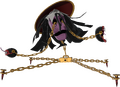 Model from Persona 5: The Phantom X
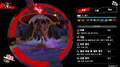 Shedim after defeating Aegipan in Persona 5: The Phantom X
