Futsunushi

Futsunushi is a Demon in the Megami Tensei franchise.
Profile
Origin
Futsunushi is a prominent kami in Shinto, traditionally associated with swords, warfare, and martial authority. His name is commonly interpreted as meaning “Master of the Sword” or “Lord of Futsu,” with futsu understood to refer to the sound or force of a blade striking. He is therefore regarded as a deity embodying both the physical and spiritual potency of the sword, which in ancient Japan functioned as both a weapon and a sacred object.
In the Nihon Shoki, Futsunushi is described as having been born from the blood of the fire deity Hinokagutsuchi after the creator god Izanagi slew him. The drops of blood that fell from Izanagi’s sword are said to have generated several deities, including Futsunushi. This origin links him directly to the sword as a divine instrument and situates him among deities associated with purification and martial force.
Futsunushi plays a prominent role in the myth of the pacification of the land (kuni-yuzuri), in which the heavenly deities seek to establish authority over the terrestrial realm known as Ashihara no Nakatsukuni (葦原中国, the “Central Land of Reed Plains”). In the Nihon Shoki, he is dispatched from Takamagahara (高天原; "Plain of High Heaven" or "High Plain of Heaven") together with Takemikazuchi to subdue the earthly deities who resist the transfer of rule. Their mission secures the land for the descendants of the heavenly lineage and reinforces the divine legitimacy of imperial authority. While the Kojiki places greater emphasis on Takemikazuchi, the Nihon Shoki presents Futsunushi as a central figure in the narrative.
Futsunushi is closely associated with the Nakatomi clan and its later branch, the Fujiwara clan, who claimed him as their ancestral deity. Through their political influence, his worship spread and became institutionalized within the state cult. His principal shrine is Katori Shrine in present-day Chiba Prefecture, where he is enshrined as the main deity. Katori Shrine, together with Kashima Shrine dedicated to Takemikazuchi, formed an important pair of martial shrines that held significant prestige, particularly among warrior families.
Design

|
This design section is a stub. You can help Megami Tensei Wiki by expanding it. |
| No reason provided. |
Gameplay
- For complete gameplay information, see Gameplay:Futsunushi.
Compendium

|
This section has content in need of translation. |
| The content in this section is missing a translation. You can help Megami Tensei Wiki by adding one. |
| Compendium Entries | |
|---|---|
| Shin Megami Tensei V |
The Nihonshoki sword deity who pacified Ashihara-no-Nakatsukuni. His name comes from "futsu," the fashion in which things are cut, and "nushi," a term meaning, "nature as a god." |
| Shin Megami Tensei V: Vengeance | |
| Devil Summoner: Soul Hackers(3DS) |
The Nihonshoki sword deity who pacified Ashihara no Nakatsukuni. |
| Soul Hackers 2 |
The Nihonshoki sword deity who pacified Ashihara-no-Nakatsukuni. His name comes from "futsu," the fashion in which things are cut, and "nushi," a term meaning, "nature as a god." |
| Devil Summoner: Raidou Kuzunoha vs. the Soulless Army |
The Nihonshoki deity of swords. He pacified Ashihara no Nakatsukuni before Ninigi descended there. His name comes from "futsu," the fashion in which things are cut, and "nushi," his nature as a god. |
| Raidou Remastered: The Mystery of the Soulless Army |
The Nihonshoki deity of swords. He pacified Ashihara-no-Nakatsukuni before Ninigi descended there. His name comes from "futsu," the fashion in which things are cut, and "nushi," his nature as a god. |
| Devil Summoner: Raidou Kuzunoha vs. King Abaddon |
The Nihonshoki deity of swords. He pacified Ashihara no Nakatsukuni before Ninigi descended there. His name comes from "futsu," the fashion in which things are cut, and "nushi," his nature as a god. |
| Persona 3 Reload |
The Nihonshoki sword deity who pacified Ashihara-no-Nakatsukuni. His name comes from "futsu," the fashion in which things are cut, and "nushi," his nature as a god. |
| Persona 4 |
The Nihonshoki sword deity who pacified Ashihara no Nakatsukuni. His name comes from "futsu," the fashion in which things are cut, and "nushi," his nature as a god. |
| Persona 4 Golden | |
| Persona 5 |
The Nihonshoki sword deity who pacified Ashihara-no-Nakatsukuni. His name comes from "futsu," the fashion in which things are cut, and "nushi," his nature as a god. |
| Persona 5 Royal | |
| Persona Q: Shadow of the Labyrinth |
The Nihonshoki sword deity who pacified Ashihara no Nakatsukuni. His name comes from "futsu", the fashion in which things are cut, and "nushi", his nature as a god. |
| Persona Q2: New Cinema Labyrinth |
The Nihonshoki sword deity who pacified Ashihara no Nakatsukuni. His name comes from "futsu," the fashion in which things are cut, and "nushi," his nature as a god. |
| Persona 5 Tactica |
The Nihonshoki sword deity who pacified Ashihara-no-Nakatsukuni. His name comes from "futsu," the fashion in which things are cut, and "nushi," his nature as a god. |
| Persona 5: The Phantom X |
The Nihonshoki sword deity who pacified Ashihara-no-Nakatsukuni. His name comes from "futsu," the fashion in which things are cut, and "nushi," his nature as a god. |
| Kētai Akuma Densho |
天孫降臨に先立ち葦原中つ国を平定したとされる神。タケミカヅチ神と同一視する説もある。 出身地:日本 |
Manga Appearances
Raidou Kuzunoha vs. The Lone Marebito
|
|
This appearance section is a stub. You can help Megami Tensei Wiki by expanding it. |
| No reason provided. |
Nomenclature
From the Japanese 経津主 Futsunushi. The characters 経津 futsu are ateji and it is unknown what futsu means. 主 nushi means "lord" or "master".
| Language | Name | Meaning |
|---|---|---|
 English English
|
Futsunushi | |
 Japanese Japanese
|
フツヌシ Futsunushi | |
 Simplified Chinese Simplified Chinese
|
经津主 Jīngjīnzhǔ | Futsunushi; orthographic borrowing from Japanese |
   Traditional Chinese Traditional Chinese
|
經津主 Jīngjīnzhǔ | Futsunushi; orthographic borrowing from Japanese |
 French French
|
Futsunushi | |
 German German
|
Futsunushi | |
 Italian Italian
|
Futsunushi | |
 Korean Korean
|
후츠누시 Hucheunusi | |
 Polish Polish
|
Futsunushi | |
 Brazilian Portuguese Brazilian Portuguese
|
Futsunushi | |
 Russian Russian
|
Фуцунуси Futsunusi | |
 Peninsular Spanish Peninsular Spanish
|
Futsunushi | |
 Turkish Turkish
|
Futsunuşi Shin Megami Tensei V: Vengeance Shin Megami Tensei V: Vengeance | |
| FutsunushiPersona 3 Reload | ||
Gallery
-
 Artwork from Devil Summoner: Soul Hackers
 -
 Key artwork featuring Futsunushi for Raidou Remastered: The Mystery of the Soulless Army
 -
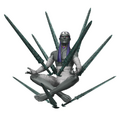 Render from Shin Megami Tensei: Liberation Dx2
 -
 Render from Persona 5
 -
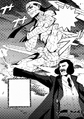 Illustration from Raidou Kuzunoha vs. The Lone Marebito
 -
 Sprite from Majin Tensei II: Spiral Nemesis
 -
 Sprite from the PlayStation version of Devil Summoner: Soul Hackers
 -
 Sprite from the Nintendo 3DS version of Devil Summoner: Soul Hackers
 -
 Sprite from Shin Megami Tensei Trading Card: Card Summoner
 -
 Icon from Shin Megami Tensei V
 -
 Icon from Soul Hackers 2
 -
-
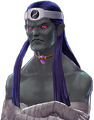 Graphic from Raidou Remastered: The Mystery of the Soulless Army
 -
 Icon from Raidou Remastered: The Mystery of the Soulless Army
 -
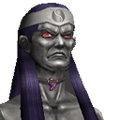 Graphic from Devil Summoner: Raidou Kuzunoha vs. King Abaddon
 -
 Graphic from Persona 3 Reload
 -
 Card graphic from Persona 4
 -
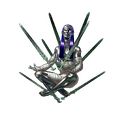 Graphic from Persona 4 Golden
 -
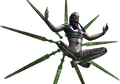 Graphic from Persona Q: Shadow of the Labyrinth
 -
 Graphic from Persona Q2: New Cinema Labyrinth
 -
 Battle icon from Persona 5: The Phantom X
 -
 Model from Persona 3 Reload
 -
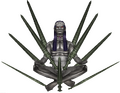 Model from Persona 4
 -
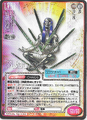 Card No.232 from Shin Megami Tensei Trading Card: 2nd Edition


Videos
- Pages with section stubs
- Pages with design section stubs
- Pages needing translations
- Pages with appearance section stubs
- Demons from Japanese Culture
- Demons from Shinto
- Demons in Shin Megami Tensei V
- Demons in Shin Megami Tensei V: Vengeance
- Guardians in Shin Megami Tensei: J
- Demons in Shin Megami Tensei: Liberation Dx2
- Demons in Majin Tensei II: Spiral Nemesis
- Demons in Devil Summoner: Soul Hackers
- Demons in Soul Hackers 2
- Demons in Devil Summoner: Raidou Kuzunoha vs. the Soulless Army
- Demons in Raidou Remastered: The Mystery of the Soulless Army
- Demons in Devil Summoner: Raidou Kuzunoha vs. King Abaddon
- Demons in Devil Summoner: Soul Hackers: Intruder
- Characters in Raidou Kuzunoha vs. The Lone Marebito
- Personas in Persona 3 Reload
- Personas in Persona 4
- Personas in Persona 4 Golden
- Personas in Persona 5
- Personas in Persona 5 Royal
- Personas in Persona Q: Shadow of the Labyrinth
- Personas in Persona Q2: New Cinema Labyrinth
- Personas in Persona 5 Tactica
- Shadows in Persona 5: The Phantom X
- Demons in Shin Megami Tensei Trading Card: Card Summoner
- Demons in Kētai Akuma Densho