
|
This demon page is a stub. You can help Megami Tensei Wiki by expanding it.
|
| No reason provided.
|
Dagon is a Demon in the Megami Tensei franchise.
Profile
Origin
Dagan,[a] also spelled Dagon,[b] is a deity who was worshiped in ancient Syria, especially in the cities Tuttul and Terqa in the mid-Euphrates Valley.[1] In the mid-Euphrates Valley, Dagan was seen as the supreme deity: he was the father of the gods and the creator of heaven and earth, and kings were bestowed their authority by him.[2] His wife was most likely Shalash.[3]
In Ugaritic sources, Dagan is named as the father of Baal. However, he plays no role himself in the Baal Cycle,[4][5] and he was perceived as a foreign deity.[6]
In his Phoenician History, Philo of Byblos mentions Dagon as a brother of El (whom Philo equates with Kronos), and he glosses his name as meaning "grain" (cf. Hebrew דָּגָן dāg̱ān).[7] Philo also narrates that Kronos (El), after overthrowing their father (whom Philo calls Ouranos), gave one of their father's pregnant concubines to Dagon as a wife, and she gives birth to a child named Demarous (i.e. Baal).[8] Philo further states that Dagon discovered grain and the plow[7][c] and equates him with Zeus Arotrios (Zeus the plowman).[9] The connection of Dagon with grain is not corroborated by other ancient sources.[10]
When mentioned in the Bible, Dagon is called a god of the Philistines with temples in Gaza and Ashdod. According to the Book of Judges, the temple in Gaza was destroyed by Samson,[11] and in the First Book of Samuel, it is said the Ark of the Covenant was placed by a statue of Dagon in his temple in Ashdod.[11] No archaeological evidence of Dagon's worship amongst the Philistines is known to have survived,[12] but most scholars accept the biblical claim that Dagon was worshiped by the Philistines.[13] In addition to the aforementioned accounts, the First Book of Maccabees mentions that Jonathan Maccabaeus destroyed the temple of Dagon in Ashdod;[11] note that this was long after the Philistines had ceased being a distinct people.[14]
Dagon was incorporated into H. P. Lovecraft's Cthulhu Mythos, starting with his second story, Dagon, first written in 1917. Here, Dagon is represented as a Philistine "Fish-God" being worshiped by the Deep Ones, beings described as being human in form but with "webbed hands and feet, shockingly wide and flabby lips, glassy, bulging eyes, and other features less pleasant to recall". The visage of Dagon began tormenting a German man, until the story abruptly ends as the man panics at the sight of a window.[15] The fate of the man is implied in The Call of Cthulhu, where a suicide by jumping out of the window is mentioned in passing.[16]
Design
Dagon's Shin Megami Tensei design has fish-like characteristics. This is because outdated scholarship portrayed Dagan as a fish god due to superficial resemblance of his name with the Hebrew word for "fish" (דָּג, romanized dāg̱),[17] which is also reflected in his official profiles. This flawed idea was also used to produce the incarnation of Dagan seen in the Cthulhu Mythos.
Gameplay
|
|
| Name
|
Level
|
HP
|
MP
|
| Dagon
|
74
|
888
|
262
|
|
|
|
|
| Attack
|
Accuracy
|
Defense
|
Evasion
|
M. Attack
|
M. Effect
|
Moon PhaseDemon Aggression
|
| 154Most versions/152Mega-CD
|
26Most versions/25Super CD-ROM²/23Mega-CD
|
82Most versions/81Super CD-ROM²/103Mega-CD
|
20
|
21
|
20
|
1
|
|
| Basic Attack
|
Element
|
Hit(s)
|
Target
|
| Sword
|
1-3
|
Single enemy
|
|
|
|
|
|
| Name
|
Level
|
HP
|
MP
|
| Dagon
|
55
|
620
|
137
|
|
|
|
|
|
|
| Resistances
|
| Force
|
Elec
|
Ice
|
Fire
|
Debuff
|
Death
|
PCPoison and Confusion
|
PSParalysis and Sleep
|
| —
|
—
|
—
|
—
|
RsResist
|
RsResist
|
RsResist
|
RsResist
|
| ×1
|
×1
|
×1
|
×1
|
×¼×0.25
|
×¼×0.25
|
×¼×0.25
|
×¼×0.25
|
|
| Basic Attack
|
Hit(s)
|
Hit Rate
|
Attack Rate
|
Spell Rate
|
| 1
|
80%
|
70%
|
30%
|
|
| Magic Skills
|
| Skill
|
Attribute
|
Cost
|
Description
|
| Ziodyne
|
Electric
|
25 MP
|
Magic that brings forth a great number of powerful lightning strikes.
|
|
| Extra Skills
|
| Skill
|
Attribute
|
Description
|
| Sleep
|
PS
|
The special ability to send foes to sleep.
|
|
|
|
| Name
|
Level
|
HP
|
MP
|
| Dagon
|
55
|
620
|
137
|
|
|
|
|
| Group
|
Attack
|
Defense
|
| E
|
126
|
139
|
|
| Resistances
|
| Force
|
Elec
|
Ice
|
Fire
|
Debuff
|
Death
|
PCPoison and Confusion
|
PSParalysis and Sleep
|
| —
|
—
|
—
|
—
|
RsResist
|
RsResist
|
RsResist
|
RsResist
|
| ×1
|
×1
|
×1
|
×1
|
×¼×0.25
|
×¼×0.25
|
×¼×0.25
|
×¼×0.25
|
|
| Basic Attack
|
Hit(s)
|
Hit Rate
|
| 1
|
80%
|
|
| Magic Skills
|
| Skill
|
Attribute
|
Cost
|
Description
|
| Ziodyne
|
Electric
|
25 MP
|
Magic that brings forth a great number of powerful lightning strikes.
|
| Mediahan
|
Healing
|
50 MP
|
Magic that completely restores everyone's HP.
|
| Vitalja
|
Support
|
4 MP
|
Magic that raises the target's Endurance.
|
|
| Extra Skills
|
| Skill
|
Attribute
|
Description
|
| Sleep
|
PS
|
The special ability to send foes to sleep.
|
| Death
|
Death
|
The special ability to instantly kill foes.
|
|
Compendium

|
This section has content in need of translation.
|
| The content in this section is missing a translation. You can help Megami Tensei Wiki by adding one.
|
Game Appearances
Dagon appears in the PSP version as a boss in Tatsuya's Scenario.
Trivia
Nomenclature
Names in Other Languages
| Language |
Name |
Meaning
|
 English English
|
Dagon
|
 Japanese Japanese
|
ダゴン Dagon |
Dagon
|
ダコン Last Bible Special Last Bible Special
Dakon |
Misspelling of the above
|
   Traditional Chinese Traditional Chinese
|
達貢 Dágòng |
Dagon
|
Gallery
Notes
- ↑ Ugaritic: 𐎄𐎂𐎐, romanized dgn
- ↑ Hebrew: דָּגוֹן, romanized Dāg̱ôn; Greek: Δαγών, romanized Dagṓn
- ↑ Philo portrays the Phoenician gods as humans who were deified by later generations; this approach is called euhemerism after the 4th-century BC Greek writer Euhemerus, who used the same approach with the Greek gods. Therefore, portraying Dagon as the discoverer of grain and the plow is Philo's way of rationalizing the deity Dagon.
References
- General
- Specific
- ↑ Feliu 2003, p. 303.
- ↑ Feliu 2003, pp. 304-306.
- ↑ Feliu 2003, pp. 288-292.
- ↑ Feliu 2003, pp. 300-301.
- ↑ "Baal, Son of Dagan: In Search of Baal's Double Paternity", Noga Ayali-Darshan. Journal of the American Oriental Society, 133(4), pp. 651-657. Published October-December 2013 by American Oriental Society. https://doi.org/10.7817/jameroriesoci.133.4.0651
- ↑ Feliu 2003, p. 302.
- ↑ 7.0 7.1 Baumgarten 1981, p. 190.
- ↑ Baumgarten 1981, p. 195.
- ↑ Baumgarten 1981, p. 182.
- ↑ Feliu 2003, pp. 283-284.
- ↑ 11.0 11.1 11.2 Emanuel 2016, p. 37.
- ↑ Emanuel 2016, pp. 52-56.
- ↑ Emanuel 2016, pp. 23-24.
- ↑ Emanuel 2016, p. 47.
- ↑ Lovecraft, H.P. (2018 [1917]). Dagon in Macabre Tales. Sirius Publishing. pp. 21-27
- ↑ Lovecraft, H.P. (2018). The Call of Cthulhu in The Call of Cthulhu and Other Stories. Sirius Publishing.
- ↑ "Chronologically, the next suggestion for an etymological explanation of biblical Dagon dates to the IV-V century CE, when, first Saint Jerome and then certain mediaeval exegetes related the name of the god with Hebrew dāg ‘fish’, and as a result described Dagon as having the profile of a fish-god. This proposal has had few followers among modern researchers who connect him instead with the Odacon of Berossus." Feliu 2003, p. 280.


 Artwork from the Super Famicom version of Shin Megami Tensei
 Artwork from Devil Children White Book
 Render from Shin Megami Tensei: Liberation Dx2
 Sprite from the Super Famicom version of Shin Megami Tensei
 Sprite from the Mega-CD version of Shin Megami Tensei
 Sprite from the PlayStation version of Shin Megami Tensei
 Sprite from the Game Boy version of Last Bible II
 Sprite from the Game Boy Color version of Last Bible II
 Sprite from Last Bible III
 Sprite from Last Bible Special
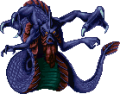 Sprite from Majin Tensei
 Sprite from the PlayStation Portable version of Persona 2: Eternal Punishment
 Sprite from Devil Children White Book
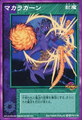 Dagon in Card FW-149 Makarakarn from Shin Megami Tensei Devil Children Card Game: Byakusei no Monshou
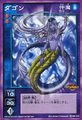 Card SW-049 from Shin Megami Tensei Devil Children Card Game: Kakushin Joshou


