Buraq

|
This demon page is a stub. You can help Megami Tensei Wiki by expanding it. |
| No reason provided. |
| Buraq | |
| ブラーク | |

Artwork from Devil Summoner: Soul Hackers | |
| Origin | Islam |
| Race(s) | Holy |
| Alignment(s) | Light-Neutral Devil Summoner: Soul Hackers Devil Summoner: Soul Hackers |
Buraq is a Demon in the Megami Tensei franchise.
Profile
Origin
The Buraq[a] is a creature said to have been ridden by the prophet Muhammad during his two night journeys from Mecca to Jerusalem (Al-Isra')[b] and then to heaven (Al-Miraj).[c] While not mentioned in the Qur'an's narration of Muhammad's journey in Surah 53, the Buraq is known from hadiths.
Design

|
This design section is a stub. You can help Megami Tensei Wiki by expanding it. |
| No reason provided. |
Buraq has an appearance similar to a bike to allude to its role as a mount.[1]
Gameplay
|
|
This gameplay section is a stub. You can help Megami Tensei Wiki by expanding it. |
| No reason provided. |
Compendium
| Compendium Entries | |
|---|---|
| Devil Summoner: Soul Hackers(3DS) |
A holy beast that the prophet Mohammed rode on his journey to heaven and hell. It has a body like a horse, the face of a woman, donkey ears, and a beautiful tail, like a peacock. Its body glows silver and is decorated with diamonds and emeralds. It is said that after returning from traveling with Mohammed. it still managed to catch a pot that had started to fall before it departed on its journey. |
Nomenclature
Islamic scholars traditionally derive the name of Buraq from the Arabic triconsonantal root b-r-q ("lightning"). It may instead come from the Middle Persian word for "steed", bārag.[2]
| Language | Name | Meaning |
|---|---|---|
 English English
|
Buraq | |
 Japanese Japanese
|
ブラーク Burāku | Buraq |
Gallery
-
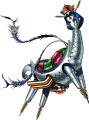 Artwork from Devil Summoner: Soul Hackers
 -
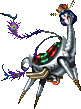 Sprite from the PlayStation version of Devil Summoner: Soul Hackers
 -
 Sprite from the Nintendo 3DS version of Devil Summoner: Soul Hackers
 -
 Sprite from Shin Megami Tensei Trading Card: Card Summoner
 -
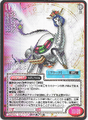 Card No.213 from Shin Megami Tensei Trading Card: 2nd Edition


Notes
References
- ↑ "ブラークは預言者が乗った乗り物でジブリールの乗り物でもあり、ものすごいスピードで移動すると言うことなので、バイクっぽくしました。" Kazuma Kaneko, [1]. Published July 19, 2026. Retrieved July 20, 2026. X.
- ↑ Shaul Shaked, HADITH v. AS INFLUENCED BY IRANIAN IDEAS AND PRACTICES. Published December 15, 2002 (updated June 5, 2013). Retrieved September 16, 2025. Encyclopaedia Iranica.